So, that is that. The World Cup has been and gone, the wall chart is in the recycling, and the nation is easing itself off a month of kick-offs at silly o'clock. And into the afterglow, with a new face outside Number 10, the average price tag on a home coming to market just came down.

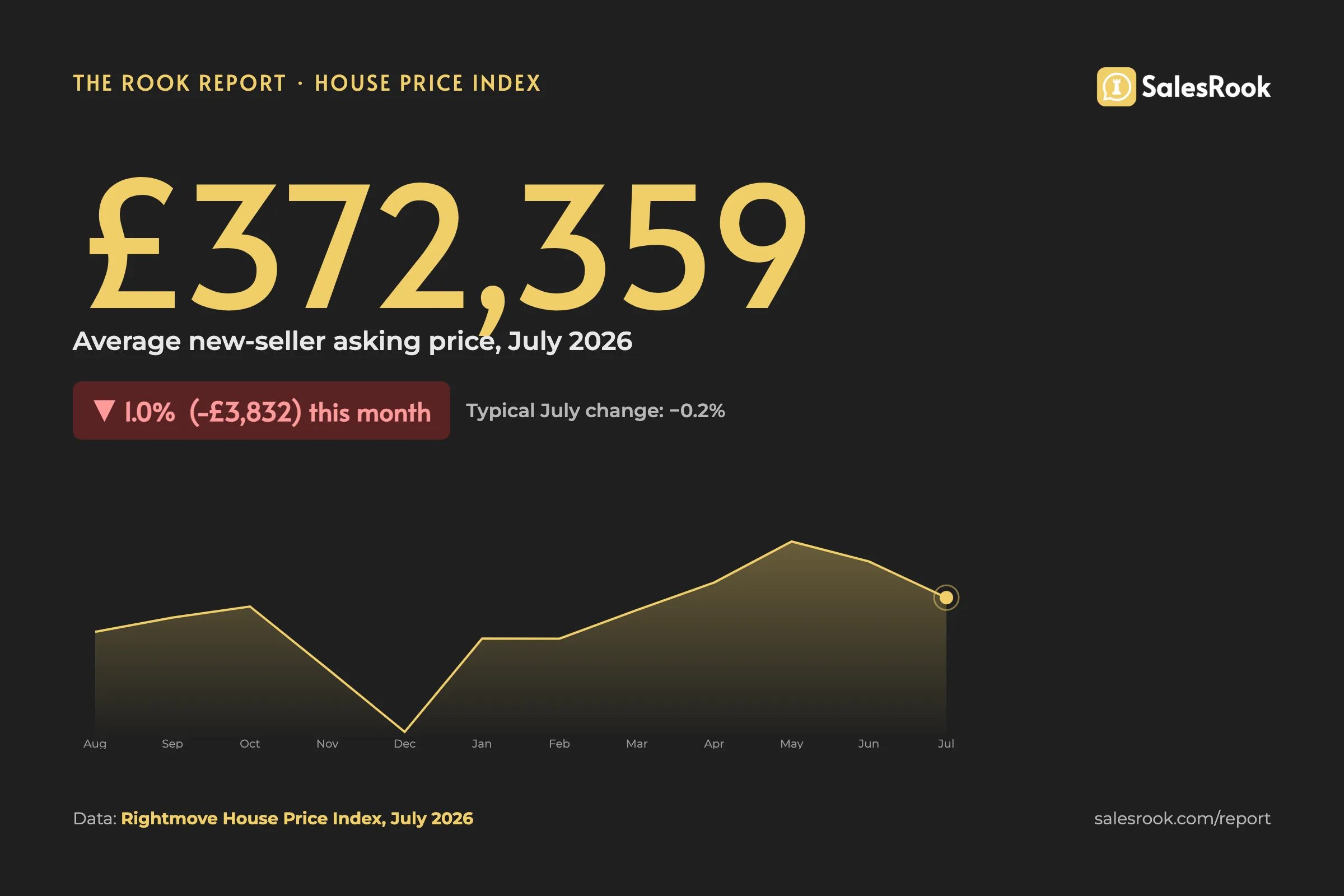
Because on 20 July, the morning after the final, Rightmove published its July House Price Index, the most-watched read on the UK market. The average asking price of a newly-listed home fell 1.0% this month to £372,359, a drop of £3,832. Prices usually drift down a touch in July. They do not usually do this: the ten-year average dip for the month is a sliver of 0.2%.
If you run an agency, that headline is not a news item. It is Monday's first conversation: the seller you are valuing on Tuesday read it between the highlights, and so did the landlord wondering whether to hold. So let us do the useful thing. Not doom, not spin. What the numbers say, and what a sharp agent does next.
A bigger dip than July usually delivers
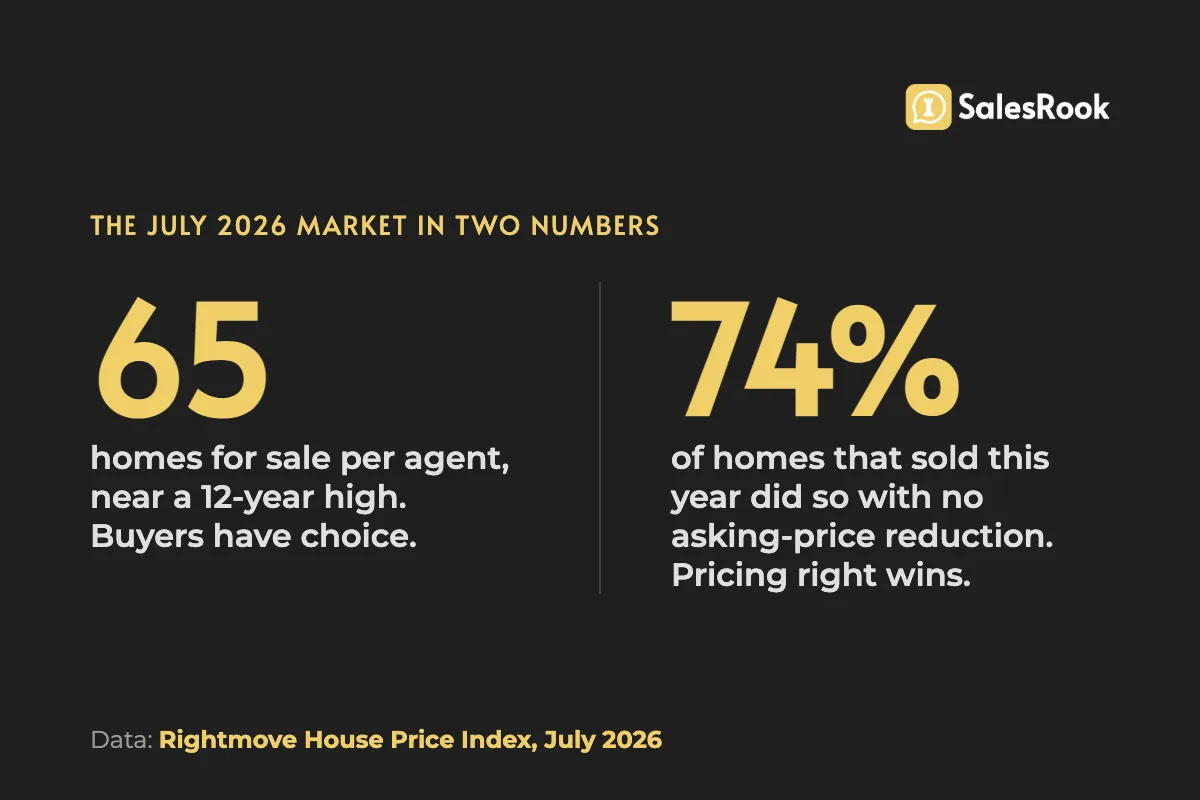
The story of the month is not the price. It is the choice. Rightmove counts around 65 homes for sale per agent, close to a 12-year high for the time of year. That is the deepest shop window buyers have browsed in over a decade, and every buyer knows it.
Rightmove's own read is refreshingly free of jargon. Their property expert points at the sofa, the telly and the sunshine before the spreadsheet.
This month's larger-than-normal price fall reflects the reality of a market where buyers have plenty of choice and sellers are having to work harder to stand out and attract them. They're also competing with an unusual number of distractions which have been keeping the minds of some potential buyers occupied, namely the World Cup and the hot weather.
Colleen Babcock, property expert at Rightmove
You lived that quote for a month: the applicant who went quiet on match nights, the viewing moved twice for the heat, the offer that stalled somewhere around the quarter-finals. Here is the part I would pin above the valuations diary now the final whistle has gone. A summer distraction is temporary. The habit it teaches a seller, chasing the market down with late reductions, is not. The agents who win the autumn are pricing to sell in July, not pricing to test and apologising for a reduction in September.
Choice, not crisis
It would be easy to read a bigger-than-usual fall as a market in trouble. The evidence underneath says something calmer: busy, but picky. Sales agreed in the first half of 2026 ran about 6% behind the same stretch of 2025, yet sat level with the first half of 2024. People are still buying. They are buying the right home at the right price, and walking past the rest.
Rightmove even measured the weather, which I admire. Their analysis shows the first May heatwave knocked buyer demand by around 8% before it bounced back, June's heat trimmed it by 6%, and the July hot spell by 4%. These are dips, not departures. Nobody left the stadium. Your buyers went quiet for a fortnight, decided by the paddling pool what they could afford, and are now wandering back indoors with nothing left to watch.
The first half of 2026 has been more challenging than many predicted, with the unexpected war in Iran contributing to higher mortgage rates and greater uncertainty for buyers. While activity remains below last year's levels, it's encouraging that the number of sales being agreed in the first half of the year is in line with 2024.
Colleen Babcock, property expert at Rightmove
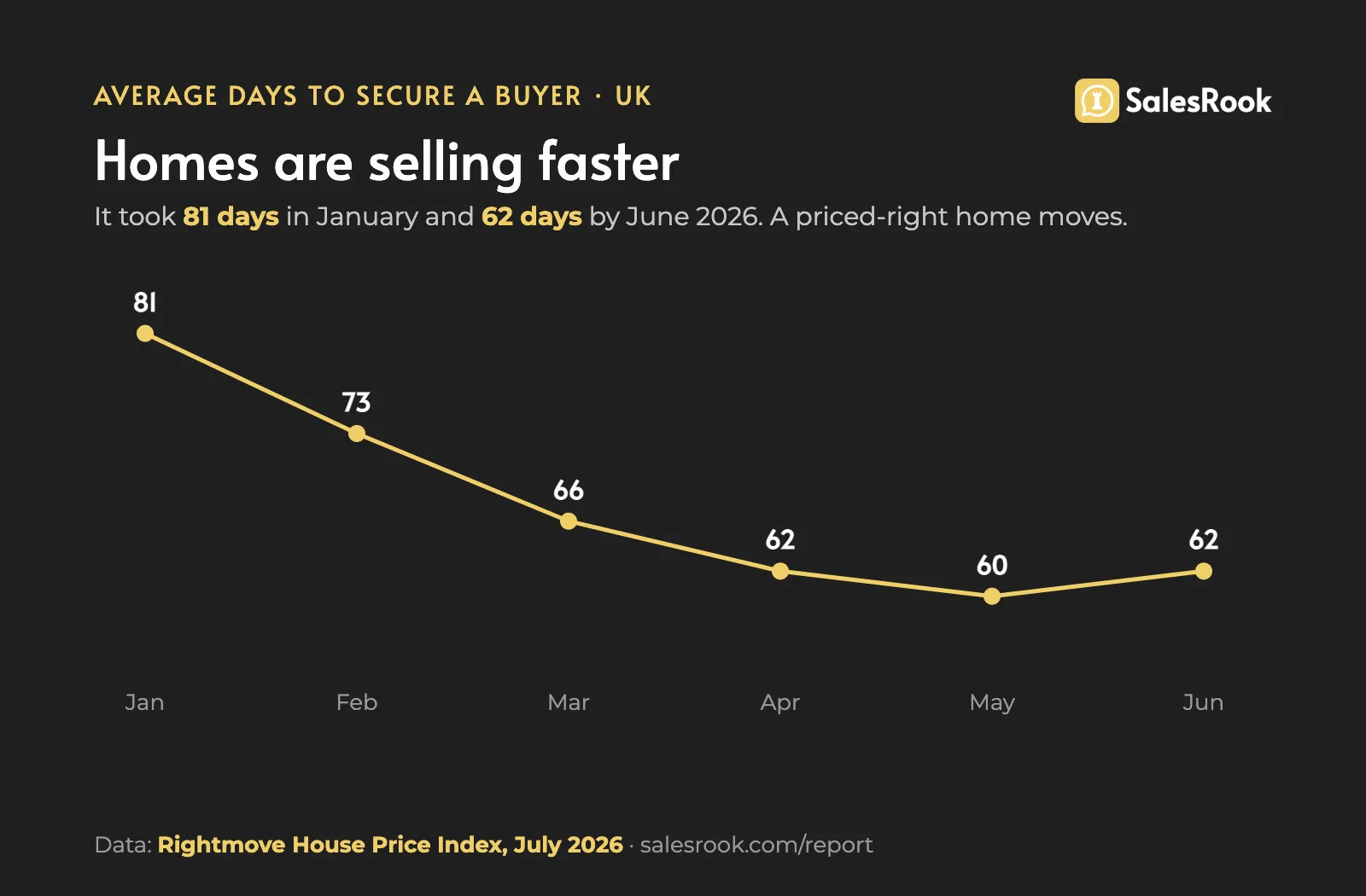
Notice the speed. It took 81 days to find a buyer back in January. By June it was 62. A market that is genuinely stalling gets slower. This one got faster, because the homes that are priced honestly are moving, while the ones that are not sit on the portal telling their owners a comfortable story and dragging the average down for everyone.
The regional split nobody puts on a national headline
There is no such thing as "the UK market" when you are stood in a branch on a Tuesday. There are eleven of them, and this month they pulled in different directions. Only three regions saw asking prices rise month on month: the North West and Yorkshire and The Humber, each up 0.3%, and Wales up 0.2%. Everywhere else edged down, with the North East seeing the sharpest monthly fall at 2.0%.
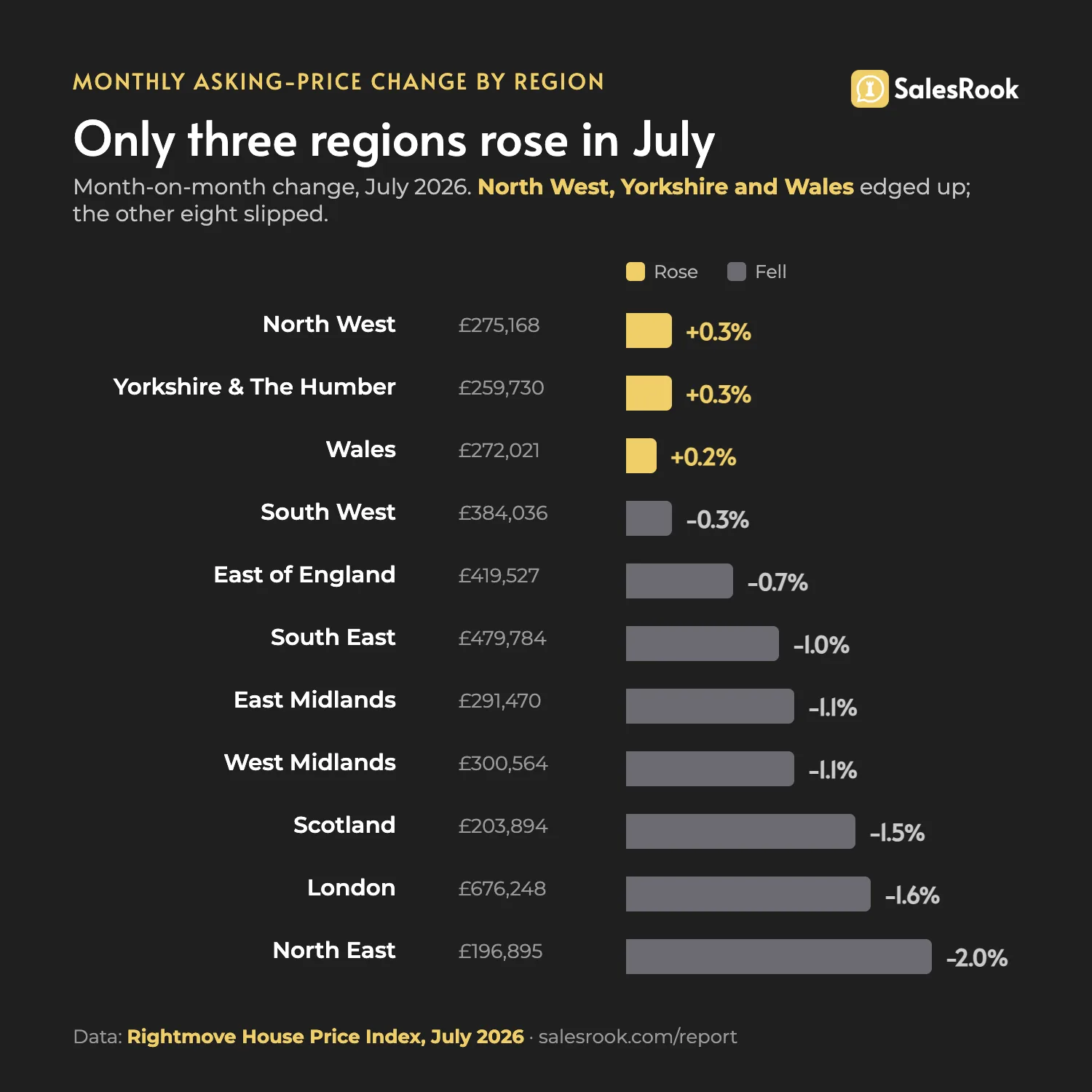
Zoom out to the year, though, and the map flips. The North West is up 2.3% on twelve months ago and Scotland up 2.2%, while London is down 1.2% over the year and still carries the highest average price in the country at £676,248. But the number I would steal for your own patch is not a price at all. It is Scotland's time-to-sell: 29 days to secure a buyer, less than half the London figure of 70.
Quite the summer north of the border. Scotland reached their first World Cup since 1998, a sentence that had waited twenty-eight years to be written. But if a Scottish seller wants a summer result worth talking about, point them at the house price: up 2.2% over the year, the strongest in Britain, with homes changing hands in 29 days flat. Where stock is tight and pricing is keen, homes fly; where it is loose, they linger. Same country, same interest rates: what differs is how much choice the buyer has, and how honestly the asking price respects it.

3 of 11
regions saw asking prices rise this month. The map you hand a seller should be their region, not the national average that made the news.
Buyers are still buying, and buying now beats renting
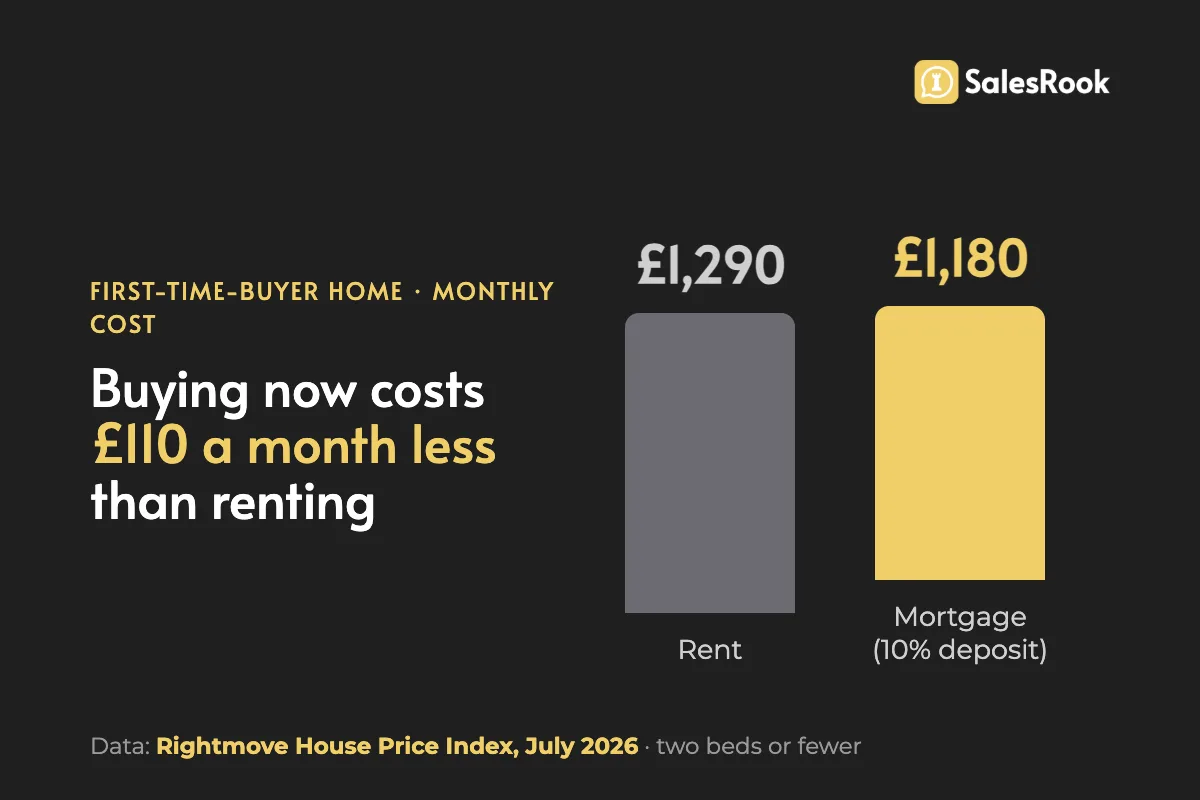
Now for the fact that never makes the front page, and it is the most useful one you own. On a typical first-time-buyer home, two bedrooms or fewer, the average monthly mortgage payment on a 10% deposit is now £1,180. The average rent on the equivalent home is £1,290. Buying is about £110 a month cheaper than renting, and the £1,180 buys an asset instead of paying off someone else's.
Rates are the reason buyers hesitated, and the reason some are coming back. The average two-year fixed mortgage rate now sits at 4.92%, up from 4.25% in February before the war in Iran unsettled the markets, but down from 5.08% just last month. The direction of travel, gently, is friendlier.
Mortgage rates are higher than many buyers would have hoped for at the start of the year, and the increases due to the war in Iran have understandably dented confidence for some. However, lenders remain keen to lend, and the mortgage market is still competitive.
Matt Smith, Rightmove's mortgages expert
For an agent, that affordability line is not a market-report footnote. It is the exact sentence that turns a nervous renter into a Saturday viewing. A buyer sitting on the fence in July is not usually short of desire. They are short of permission. Say the arithmetic out loud, £1,180 against £1,290, and you have handed it to them.
Price it right on day one and it sells
If there is one number from this month to repeat until it sticks, it is this: nearly three-quarters of the homes that sold and completed this year did so without ever cutting the asking price. Pricing right on day one is not caution. It is the fastest route to a sold board, and the data has stopped being subtle about it.
Pricing remains critical, and it's remarkable that nearly three-quarters of homes that have sold so far this year have done so without needing an asking price reduction. A new Prime Minister also presents an opportunity to make housing a renewed priority, with action needed to support affordability, mobility and the delivery of more homes.
Colleen Babcock, property expert at Rightmove
You already knew this in your bones. What the month's data hands you is the proof to put in front of the seller who insists on testing the market with an extra ten grand on top. Because the overpriced instruction does not just fail to sell. It sits on the portal like a striker stood in an offside position: present, visible, contributing nothing. It advertises your board next to a stale price, drags your average days-on-market up, and quietly unnerves every seller on your books who priced properly.
So what does a sharp agent actually do this week?
Put the whole report back together and it describes one market: buyers with 65 homes to choose from, coming off a month of football and heat, still willing to move quickly for the home that is priced right. A market like that rewards exactly two things, pricing honestly and answering first. The first is your judgement, and no software on earth replaces it. The second is where most agencies quietly leak the buyers, and the hidden sellers stood behind them, that this report says you now have to fight for. When a buyer has that much choice, the agent who replies in ninety seconds gets the viewing. The agent who replies at 9am tomorrow is answering someone who fell for a different house last night.
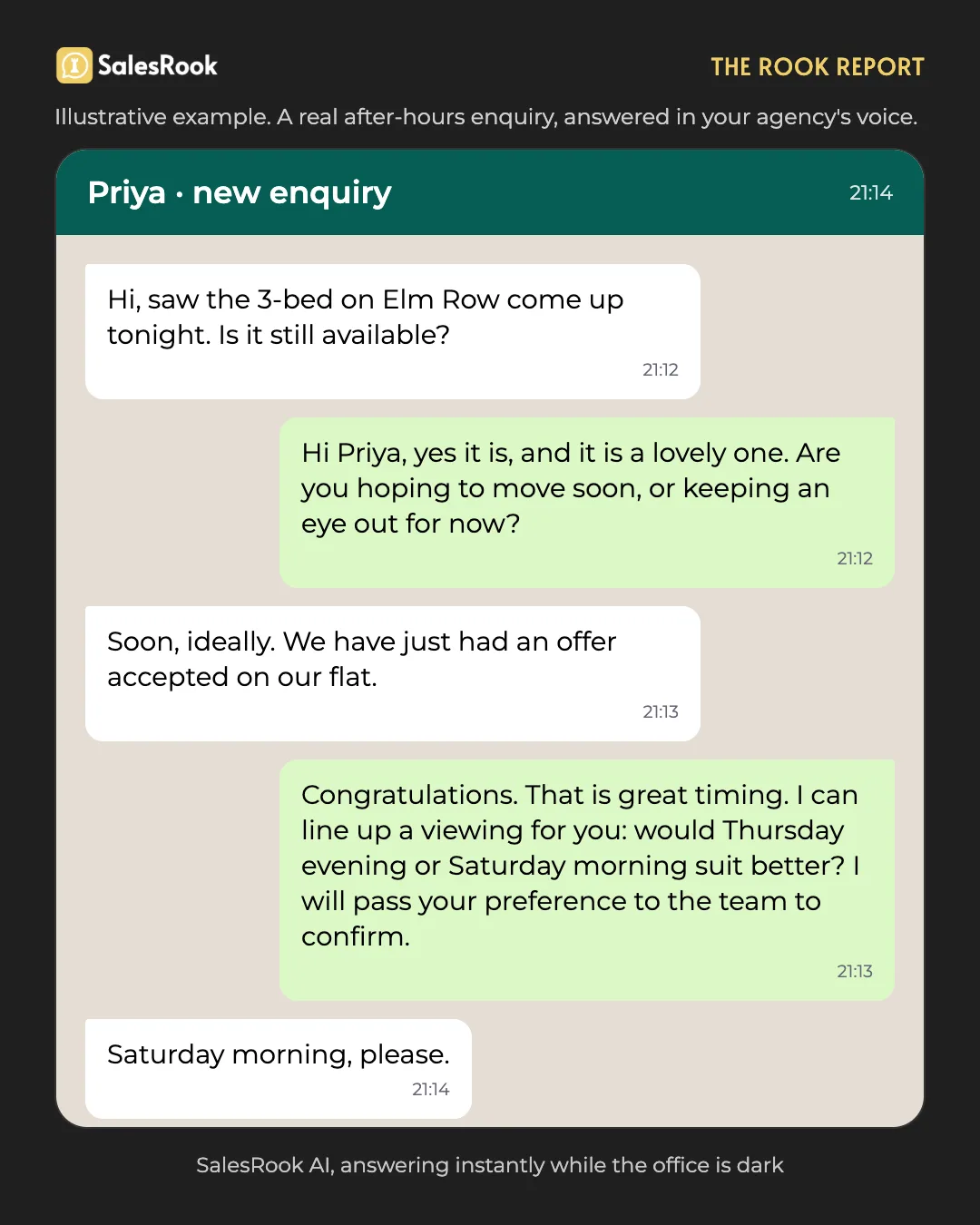
The tournament is over. The 9pm enquiry habit is not.
A month of late kick-offs trained your buyers to browse after dark. They will not untrain themselves to suit your opening hours. This is the 8.48pm problem, and it is not going anywhere.
That gap between ninety seconds and tomorrow morning is where we live. SalesRook's WhatsApp AI answers property enquiries the instant they land, at 9pm on the night of a final as happily as 9am on a wet Tuesday, in your agency's voice, and lines up the viewing by gathering the applicant's preferred times and handing them to your negotiator to confirm. Across our network that is more than 300,000 property enquiry messages handled every month for 1,500-plus professionals, and WhatsApp conversations see reply rates approaching 87%, against roughly 20% for email. Those are our own platform figures, and I will be straight with you about the rest: the mechanism is not proprietary. You can copy it by hand tonight, for free, by answering every enquiry the evening it arrives. What the software adds is that it happens every night, whether the distraction is a World Cup, a heatwave, or just a very good Tuesday on the telly.
So here is the July playbook. Three moves, and not one of them needs our software to start:
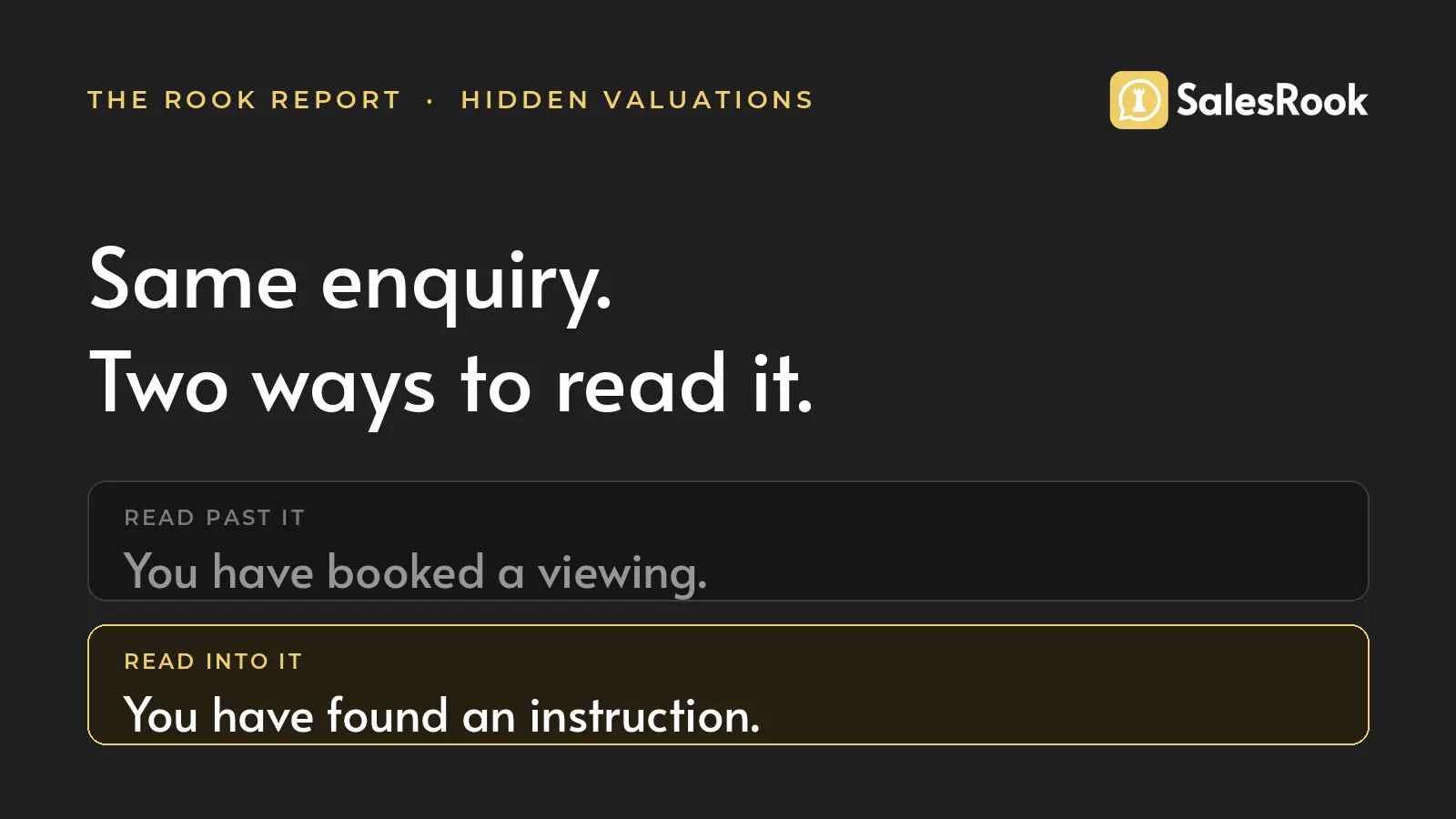
- Answer the after-hours enquiry before a rival does. A month of extra time taught your buyers to browse at 9pm, and the final whistle has not untaught them; by the time you unlock the office they have lined up a viewing with whoever replied first. We wrote the full case for that speed in our piece on after-hours property enquiries.
- Read every enquiry for the seller hiding inside it. In a market this busy, roughly one in five buyer enquiries is quietly a valuation. The person asking about a two-bed usually has a home to sell, and they will tell you about it if the conversation is warm enough to invite it. With stock at a 12-year high, the agency that spots those hidden sellers first wins the instructions everyone else is fighting over.
- Price the instruction to sell in July, not to test in July. With 65 homes competing for the same buyer, the honest number is the one that gets the viewing this week rather than the reduction in September. That three-quarters figure is your evidence at the kitchen table.
That is the whole playbook. None of it is clever, and I mean that as the highest compliment: it is the difference between a quiet autumn and a busy one, and it comes down to being the agency that answers first and prices straight while everyone else waits for the new season to give them something else to watch.
The month in one line
Prices dipped by more than a normal July, buyers have more choice than they have had in over a decade, and the homes that are priced honestly are still selling, faster than they were in January. It is not a market that rewards panic. It is a market that rewards the agent who prices straight and answers first, now that the sofa has finally handed everyone back.
So here is my dare for the week ahead. Take last night's enquiries, the ones that arrived after you locked up, and count how many had a real reply before you opened this morning. Then ask yourself how many of those buyers have already lined up a viewing with the agent down the road. That count, not the national headline, is the number that decides your autumn. The football is finished. Your season starts now.
And if you would rather that count simply came back at zero missed, every night, that is the whole reason SalesRook exists. When you are curious to see it answering your enquiries in your agency's voice, book a quiet ten-minute look.
Data throughout: Rightmove House Price Index, July 2026, published 20 July 2026. Mortgage-rate data via Podium Solutions. SalesRook platform figures are our own internal data.

Max Hardy
Co-Founder
Max Hardy is the Co-Founder of SalesRook, a leading provider of AI solutions for the property sector. With a background in technology and property, Max leads SalesRook's mission to transform how estate agents and mortgage brokers engage with leads through AI-powered WhatsApp automation.