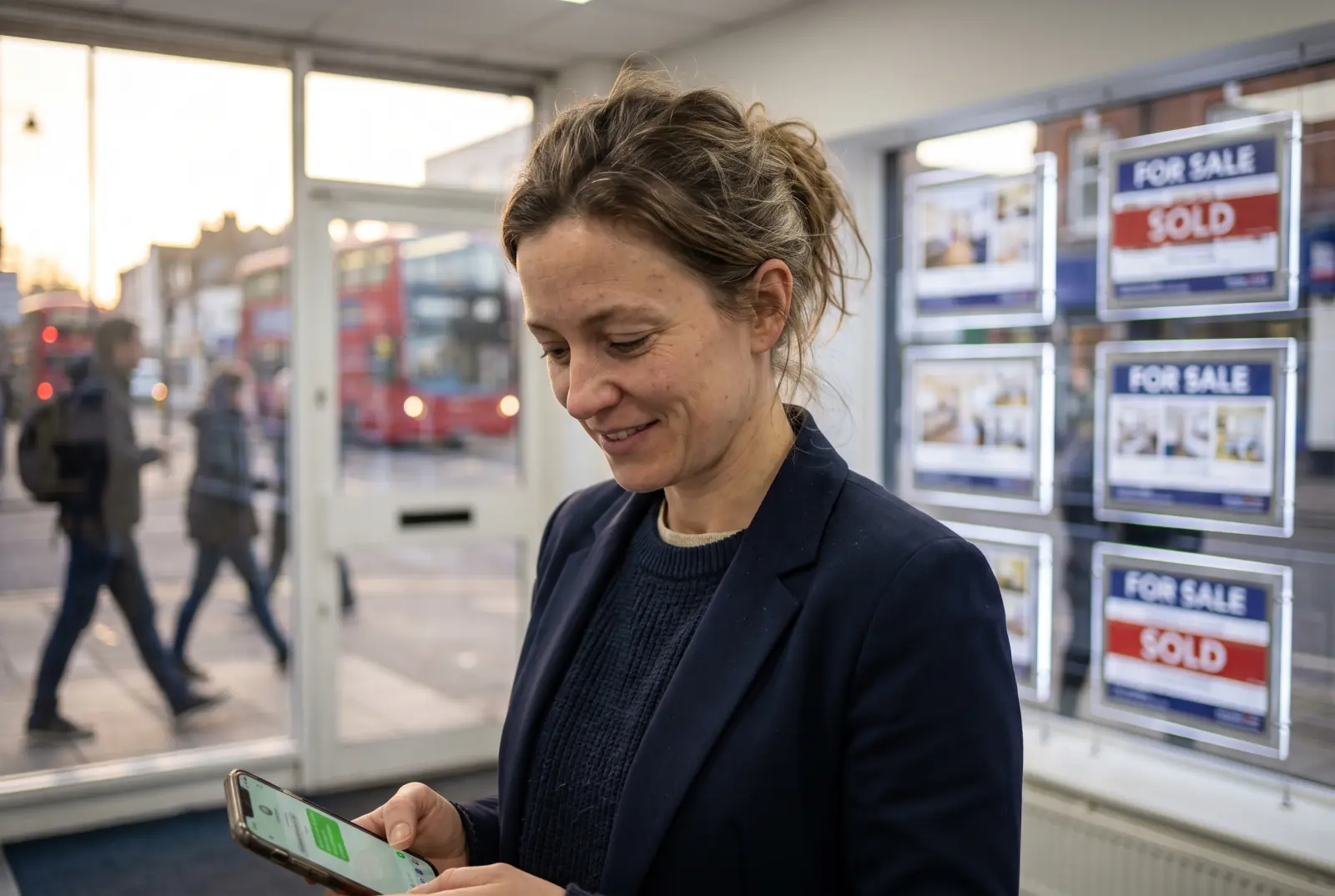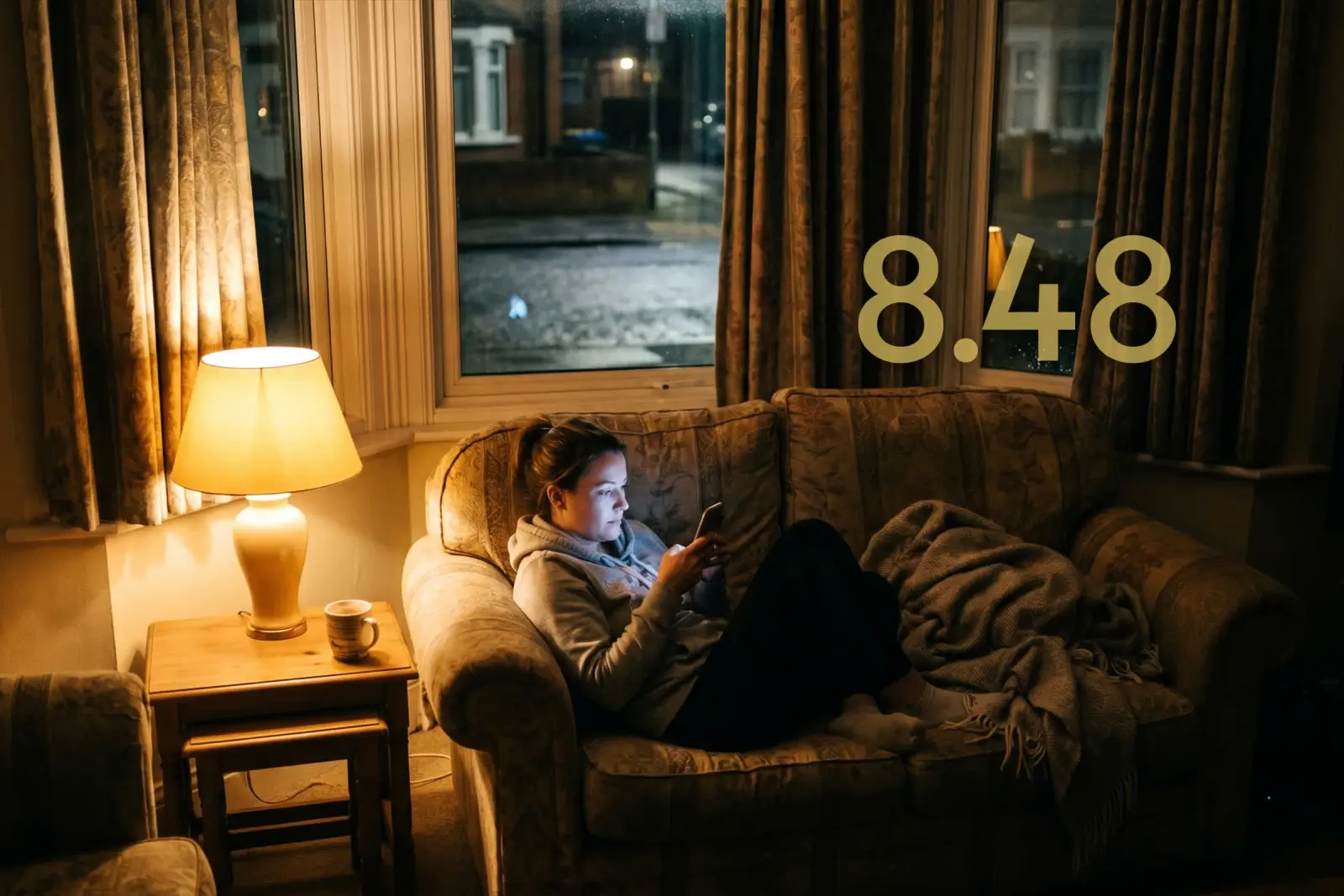
At 8.48pm on a Wednesday, more people in Britain are looking at houses than at any other minute of the week. That is Rightmove's own finding: the single busiest minute on the UK's biggest property website falls in the middle of the evening, deep in sofa time.
Now imagine ringing one of them.
The property market has moved its shopping hours to a time of day when a phone call is socially impossible. The buyer scrolling at 8.48pm has children asleep upstairs, a partner mid-sentence, dinner balanced on their knees. They will happily type at that hour. Around 90% of UK adults use WhatsApp, and their evening conversations already live in it. Answer a voice call from an unknown number, at night, about a house? Almost nobody.
That one minute explains most of my company's strategy. SalesRook is deliberately, unapologetically a WhatsApp and SMS specialist for UK estate agents and mortgage brokers. We are not an omni-channel everything vendor. We walked away from building a voice AI. This piece is the why, including the part where I question whether anybody on the customer's side of the counter actually wants what voice AI is selling.
The short version is on film. The long version, with the numbers behind it, runs underneath.
The argument of this piece, in under two minutes. Presented by Sky from SalesRook. Written by Max Hardy.
The 9am ring-round is a habit, not a strategy
We can put a number on that from our own platform. Across one ten-office London agency group, 11,835 people made a first enquiry in the three months to 22 July 2026, and 53.4% of them first got in touch outside branch hours: outside Monday to Friday 8.30am to 6pm and Saturday 10am to 4pm, which is to say when there was nobody in the office to answer. These are our own platform figures rather than an independent audit, and they describe one client's funnel, not the industry. But it is the funnel we can actually see, and more than half of it arrives after the lights go out. It is the reason we wrote a whole piece on the after-hours enquiry.
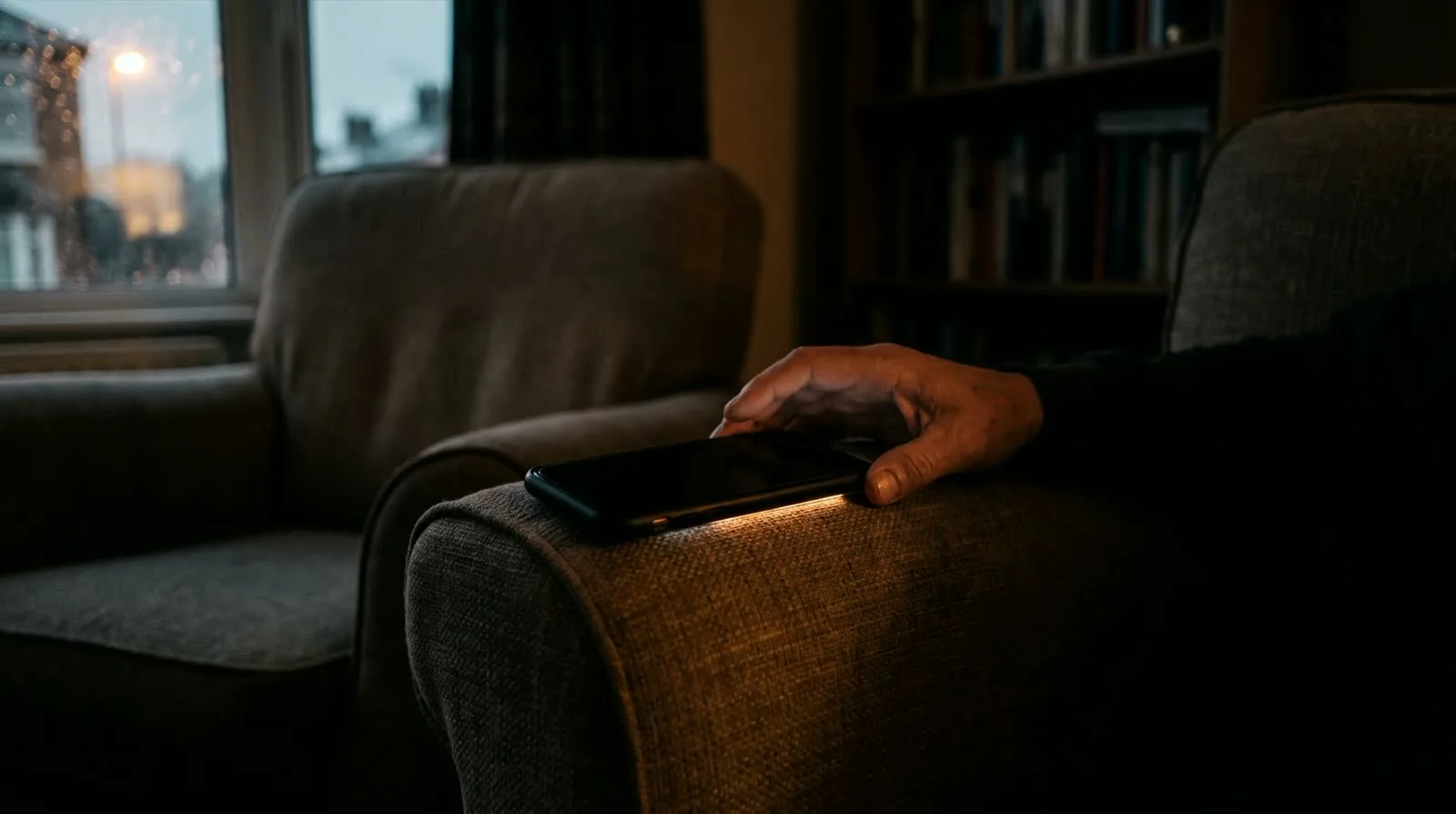
Sofa time. The phone is in the room, the call is not being answered, and the enquiry is still live.
The industry's traditional answer to the overnight pile is the 9am ring-round: print the list, work the phones, leave voicemails, move on to the day's viewings.
The ring-round made sense when the customer sat near a landline. It stops making sense the moment the customer stops answering, and they have stopped. In a July 2026 Street Group survey of 1,830 sellers, 85% said they expect a reply within 24 hours. But the same public that expects that speed does not express it by waiting beside a phone. The enquiry went out at 8.48pm from a sofa. By 9am its sender is on a train, in a meeting, on the school run. The call goes to voicemail, the voicemail is never played, and by lunchtime a warm enquiry is a cold list.
And the stopwatch is tightening. When Zoopla put the same question to 1,000 recent sellers in November 2025, a quarter said anything over an hour is too slow, and two thirds wanted an answer within four. The public's expectations of speed keep rising while its willingness to answer a ring keeps falling. Both curves point away from the ring-round.

Nine in the morning, working the overnight list. The discipline is not the problem. The customer no longer answers.
Agents keep saying the same thing to me, in almost exactly the same words: our buyers will not pick up the phone after they enquire, so we want to reach them on WhatsApp instead. It is the most common conversation I have at the moment, and it is not coming from the tech-forward fringe. It comes just as often from long-established, family-run firms who have leaned on the telephone for generations and can feel it going quiet in their hands.
"They might get a better response on WhatsApp than what they do, perhaps, either trying to ring and leave messages and emails. If you can't get hold of them, if they can just pop them on WhatsApp..."
A manager at a multi-office UK estate agency, on a call with SalesRook
She was not complaining about her team. She was describing the country.
The mortgage half of our world is no different, except the cost hides better. One firm walked us through its own renewal follow-up, the process by which customers with lapsing protection policies get chased:
"This goes to two other people in the company who they'll just manually call them two or three times. And if they can't get hold of the person, they kind of leave it and nothing else is done with it."
A UK mortgage and protection brokerage, describing its own renewal follow-up
Two or three unanswered rings, then nothing. Not because anyone is lazy, but because a phone-first workflow has no next move when nobody picks up.
A phone-first process does not just respond slowly. It silently throws customers away.
An industry older than most countries
At the Kerfuffle Conference this summer, an estate agent joked to me that he sells houses that have been around for longer than most countries. He meant his Georgian stock, but the line stuck with me for a different reason. UK property is one of the oldest industries in the world. Homes on British books predate the telephone, the postal service, and in a few glorious cases the United States.
For most of living memory, the telephone was the estate agency's beating heart. Answer within three rings. Ring the applicant list every morning. Phone the overnight enquiries at nine sharp. In the oldest, most old-school independent firms, that discipline was inherited along with the desks, and it was genuinely the right discipline for its era. The habit is not a failing. It is heritage.
So when AI arrived, the industry's most natural instinct was to automate the thing it had always done: the call. Hence the rise of voice AI, machines that ring your leads and speak to them. I understand the instinct completely, and I think it draws exactly the wrong lesson from everything above. It automates the agent's habit instead of the customer's behaviour.

For most of living memory the telephone was the beating heart of an estate agency. The habit is not a failing. It is heritage.
Why we walked away from voice AI
Ask why voice AI exists in this market and the honest answer is that it demos brilliantly to agents. A machine that sounds nearly human, ringing a lead list at scale, feels like the future when you watch it from the agency's side of the counter. The harder question is the one I have never seen a vendor answer: where is the evidence that the British public wants to be phoned by a machine? We have gone looking, and we have never seen a single piece of UK research in which buyers or vendors ask to be telephoned by an AI. The demand is real, but it lives entirely on the agent's side. Customer service is supposed to start from the customer.
And we are not sniping from the outside here. We prototyped voice ourselves, watched the improvement curve flatten well short of the bar, and shelved it. The field reports that reach us say the same: one London agency group told us they switched their newly installed voice AI off within three days. That is what "walked away" means in the title of this section. We tried the other lane before picking ours.
The data we can find points the other way from the demos. Seven in ten Britons told YouGov back in 2021 that they rarely or never answer a call from an unrecognised number (40% not often, 32% never), and the habit has only hardened since. By 2024, in a Uswitch survey of 2,000 UK adults reported by Newsweek, 23% of 18 to 34 year olds admitted they never answer phone calls at all, and nearly seven in ten preferred a text to a call.
Sky Mobile's own research puts it more vividly still: a quarter of 18 to 25 year olds call a phone call "an absolute no-go", and 57% admit to blanking calls from their own parents. This is the generation now renting its first flats and booking its first viewings; it screens calls from people it loves. Meanwhile Ofcom's market data shows mobile-originated call minutes fell in every quarter of 2025. The phone call is the declining channel. A synthetic voice does not reverse that decline. It compounds it, because now the unknown number might also be a robot.
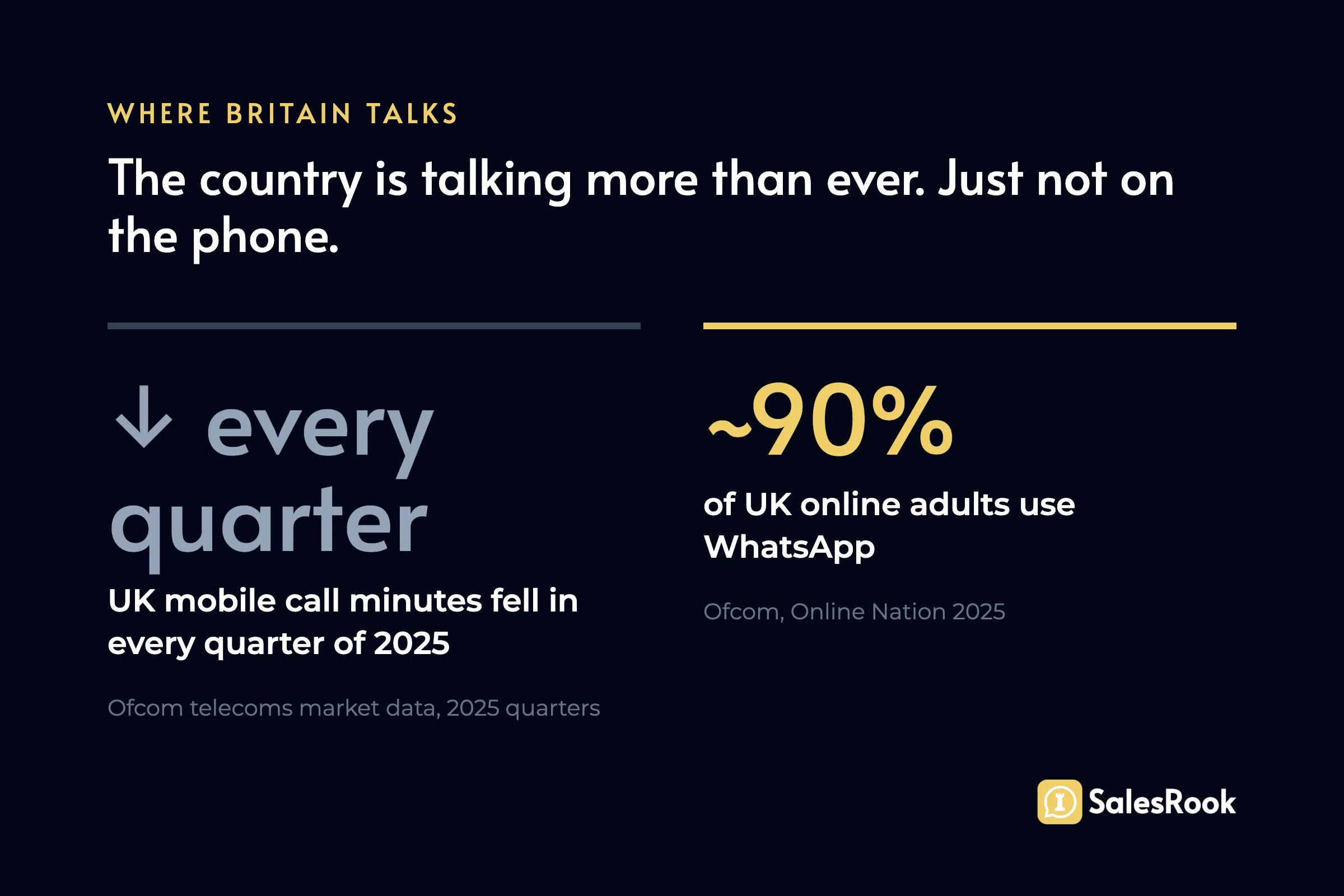
The country is talking more than ever. Just not on the phone. Sources: Ofcom telecoms market data (2025 quarters); Ofcom Online Nation 2025.
There is a deeper problem, and it has had a name since 1970: the uncanny valley. Masahiro Mori observed that our affinity for a machine rises as it becomes more human, until it gets close, at which point affinity collapses into unease. Nearly-human is worse than obviously-machine. Today's voice AI lives in that valley: fluent enough to start the impression, imperfect enough that the half-second lag or the too-smooth vowel gives it away mid-sentence, at which point the person on the line feels not served but deceived.
The obvious rejoinder is that the voices are getting better, and they are. In October 2025, researchers at Queen Mary University of London reported that listeners could no longer reliably tell state-of-the-art voice clones from real human recordings. Look closely at what passed, though: a short recorded clip, in a test, with no conversation to hold. A live call is a different bar entirely. And the better the voice gets, the worse the discovery moment becomes. A customer who realises mid-call that the "person" was synthetic does not feel impressed. They feel tricked, and they remember which agency tricked them.

Masahiro Mori named it in 1970. Nearly human is worse than obviously machine.
If crossing that valley sounds like a quick engineering sprint, consider the driverless car. We first heard that autonomous vehicles were imminent roughly twenty years ago. Two decades of the best-funded engineering effort on earth later, the UK is only now fast-tracking the first small pilots of taxi-like services without a safety driver, from spring 2026, with the full Automated Vehicles Act not law until the second half of 2027. Not because engineers were idle, but because the bar for something that must be completely seamless with human lives is extraordinarily high, and the last few percent is the generational part.
Voice-to-voice conversation faces the same shaped chasm. Passing convincingly as a helpful human on a bad mobile line, with a distracted stranger, through interruptions, accents and crosstalk, while handling chain positions, tenure, leasehold quirks and a seller's half-mentioned circumstances, is a specialist problem that may take years more to solve properly.

A bad line, a distracted stranger, crosstalk and a chain to untangle. This is the bar a live voice has to clear, every second, with no undo.
One senior decision-maker at a London lettings and sales agency, a man who runs a narrowly scoped voice AI on his own missed calls, told us bluntly that the category's voice-to-voice claims run ahead of anything its vendors have actually shipped. Note what he does, though: he still uses one, for the bounded job of answering a missed call. That job is real, we pair missed-call text-back with it ourselves, and none of this piece is a claim that the category is useless. We say more about judging that category honestly in our buyer's guide to WhatsApp AI tools.
But here is the point that outlasts every demo cycle: even a perfect voice AI is still a phone call. The thing the customer is declining is not the robot. It is the ring. Building an ever-more-human interruption machine is a snake eating its own head: perfecting the delivery of something your customer has already stopped accepting.
What about the calls that still come in?
The sharpest comeback I hear when I say all this is inbound. Fine, outbound calling is dying, but my phone still rings all day, so I will put a voice AI on the incoming line and let it catch what my team cannot. It sounds like the pragmatic middle ground. I think it misreads why anybody still rings at all.
Most of the country has drifted to typing, so the person who chose to dial anyway did it for a reason, and the reason is nearly always the same: they believe a call is the fastest way to reach a human being. Ringing a business in 2026 is a deliberate act of human-seeking. Serve that caller an obvious robot and you hand the one person who specifically asked for a human the one thing they rang to avoid. An answerphone is easier to forgive, because an answerphone is honest about what it is. It does not spend forty seconds pretending.

Ringing a business in 2026 is a deliberate act of human-seeking. It is the one caller you cannot afford to hand a machine.
The research is blunt about robots on the line
The research here is unusually blunt, and worth reading carefully, because at first glance it proves too much. In a Gartner survey of 5,728 customers reported by Call Centre Helper, 64% said they would prefer companies did not use AI in their customer service at all, and 53% said discovering a company was about to would make them consider a competitor. Read at face value, that is a charge sheet against every AI in customer service, the one writing our WhatsApp replies included.
So look at what those customers were actually objecting to. The concern named above everything else was that AI makes it harder to reach a human. That is not a rejection of a technology.
It is a rejection of an experience: the machine you never chose, wedged between you and the person you were trying to reach, on the channel you picked precisely because a human should be at the other end of it. Nothing on the market fits that description like a voice AI answering the inbound line, because the inbound caller is, as we have just seen, the person trying hardest to reach a human.
Wire a robot across that doorway and you have built the exact experience those customers said would push them towards a competitor. The same numbers say nothing yet about an assistant that is disclosed, chosen and easy to step past to a person. Hold that distinction, because it is where this whole argument lands.
64% and 53%
In a Gartner survey of 5,728 customers, 64% would prefer companies did not use AI in customer service, and 53% would consider a competitor on discovering one was about to. The concern driving both numbers: AI makes it harder to reach a human. That is a rejection of AI as a barrier, and no AI is more purely a barrier than a robot answering calls from people who dialled to reach a person.
The UK data points the same way. When TCN surveyed 1,000 UK adults in 2025, a quarter said that the moment they meet automated options on a call they immediately try to break through to a live person, and 42% still named talking to a live agent by phone as their preferred way to deal with a company. Add the failure modes we met when we prototyped voice ourselves, the beat of dead air before every reply, the live call that cannot be paused or scrolled back or quietly corrected, and the inbound line is the worst possible place to station a machine. It has to be good live, every second, with no undo, for an audience that wanted a person.
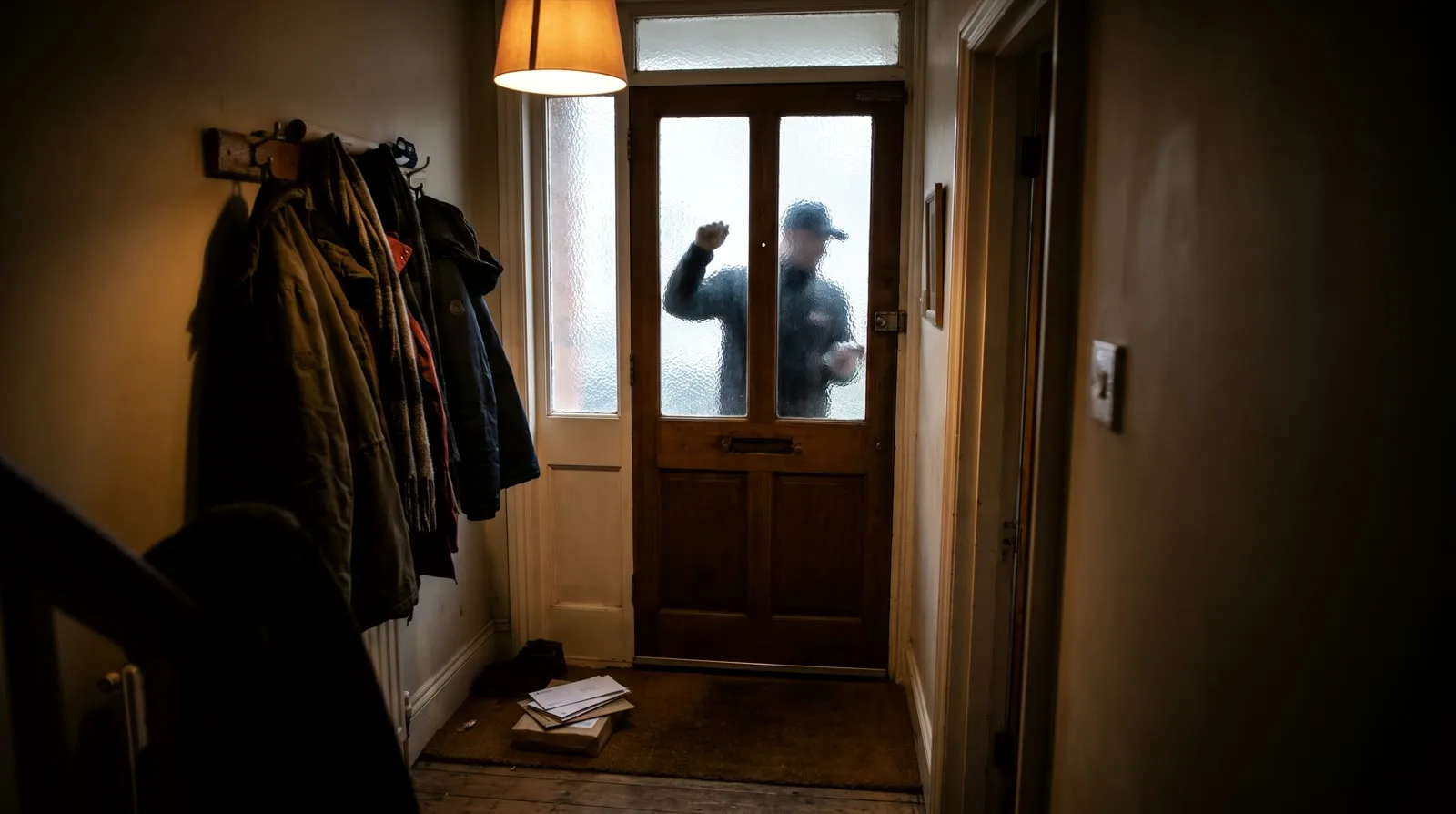
Somebody is at the door and you cannot yet tell who. An inbound call has the same shape: the caller finds out what answered only after it speaks.
Most of those callers never wanted a call
A large share of those callers never wanted a call in the first place. They rang because the website gave them a phone number and nothing else. So the better answer to a busy line is not a cleverer machine picking up. It is fewer people needing to phone at all, and a graceful catch for the ones who still do.
The catch is ordinary plumbing rather than a product category: a rung-out or after-hours call simply gets a message back from the firm's own number, and the conversation carries on in writing, where the AI never has to pass as human and the caller answers at their own pace. Missed-call text-back is a feature we ship, not a frontier, and it needs one sentence, not a chapter.
This is not theory for us. DDM Residential, the North Lincolnshire agency whose first stretch with us we published in full, run exactly this: out-of-hours calls to their sales and lettings lines route to the AI on WhatsApp instead of dropping into voicemail. It does not try to save the phone call. It saves the enquiry inside it.
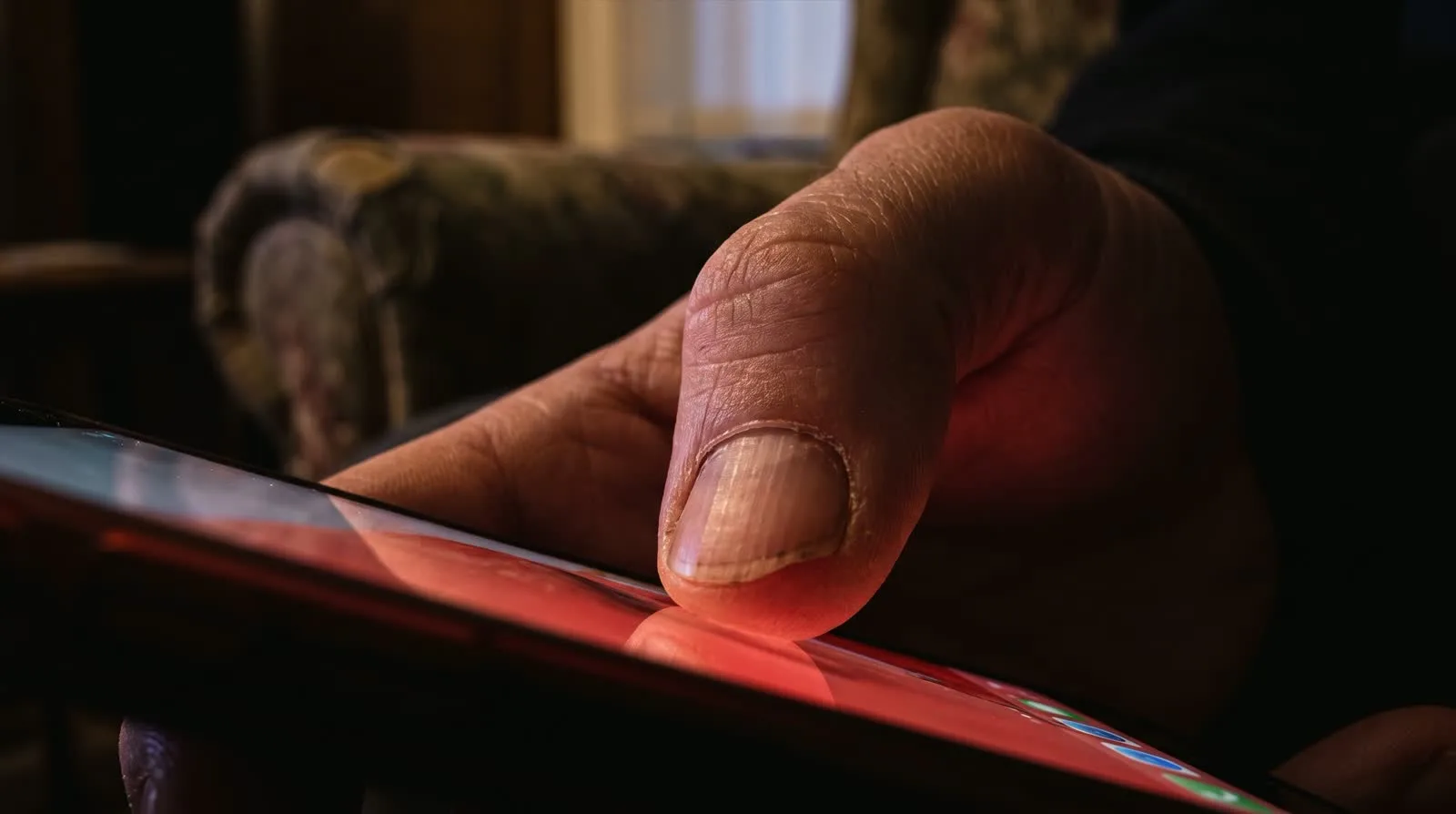
The thing being declined is not the robot. It is the ring.
The fair-minded reader will turn the question round: fine, but do those same people want a robot on WhatsApp? Two things are honestly different in a thread. A message never has to pass as human: there is no voice to fake, no dead air to explain, and a written reply is judged on whether it is fast, accurate and useful, not on whether it breathes convincingly.
And in writing, honesty is affordable. Firms running SalesRook choose whether the AI introduces itself as an AI from the first message; we measured what that honesty costs, about four points of first-message response, and published the numbers. We have covered the disclosure question since the start of 2025, when the EU's AI Act made it law across the Channel. Voice AI cannot buy honesty that cheaply. A voice agent that opens with "I am an AI" has just handed the caller exactly the robot they did not ring for, and one that stays quiet is betting the entire call on never being found out.
A disclosed AI you chose to message is a service. A robot that ambushes you when you rang expecting a person is a trick. The first earns trust it never claimed. The second spends trust it never had.
The thread that waits politely
Picture the 8.48pm enquirer again, now in a WhatsApp conversation. She asks about the garden. The reply lands in twenty seconds. She asks about the chain. Then, at 9.02pm: sorry, got to go, kids' bedtime. If that had been a phone call, it would now be over, and every retry would be a fresh interruption. The thread does something no call can do.
It waits.
At 7.41am, over coffee, she picks the conversation up exactly where it stopped. The context is intact, the questions and answers are in writing, and nobody has had to apologise for calling at a bad time, because nobody called. A call and a message age completely differently: an unanswered call decays into a voicemail nobody plays, while an unanswered message sits quietly, top of the inbox, in the most-opened app in the country.
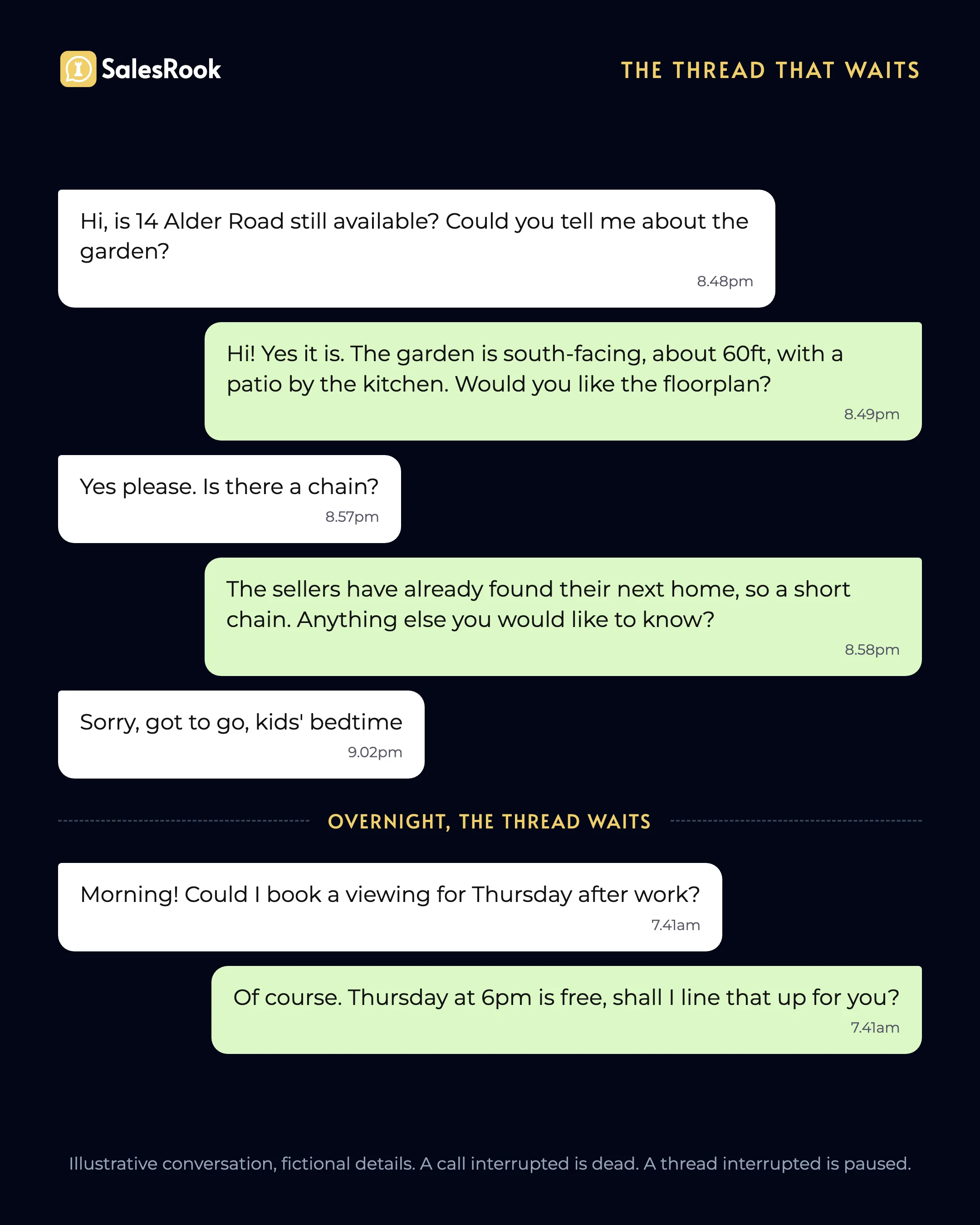
Illustrative conversation with fictional details. A call interrupted is dead. A thread interrupted is paused.
One thing this argument is not: a licence to pester people at midnight. An instant reply at 9pm to a conversation the customer opened is welcome. An unprompted chase at 11.30pm is not, and our own systems keep quiet hours for exactly that reason. The virtue of the thread is precisely that it can wait politely. A ring cannot. It demands its answer now or never, which is why it keeps getting never.
What going all-in actually means
Specialisation is only a strategy if it changes what you build. For us it meant doing one channel properly instead of four adequately: the WhatsApp Business Platform done right, on a compliant business number the firm owns, with every conversation logged, and nothing running off a negotiator's personal phone. It meant building CRM-native, into the systems agencies actually run, so the conversation starts from the record rather than beside it. It meant question flows written for UK property, where a buyer enquiry can conceal a seller and a "quick question" can conceal a chain. And it meant SMS as the graceful fallback for the sliver of the country WhatsApp has not reached. The full case for the channel itself is in our guide to WhatsApp for estate agents.
87% vs ~20%
Our WhatsApp conversations see reply rates approaching 87%, against roughly 20% for email, with a 98% open rate and a first reply in around 20 seconds. SalesRook internal data.
Depth is what the choice buys. At the time of writing the platform handles 300,000+ property enquiry messages every month across 250+ estate agency offices and 1,500+ property professionals, and what that looks like inside one firm is documented in our DDM Residential case study. And notice what the industry's own giants chose when their turn came: when Rightmove put AI in front of property search, built with Google Cloud, it was conversational AI on the front of property search. Text you can answer from a sofa. Not an outbound calling machine.
Further viewing: the BBC's Katty Kay and The Verge's Nilay Patel on AI's approval problem, the public distrust behind the numbers in this piece.
What this choice costs us, honestly
Picking a lane means naming what you gave up, so here is our list. Some customers will only ever phone, and for them the right answer is a human being plus missed-call text-back, not our AI impersonating a receptionist. Some firms want a single vendor for every channel at once; that is a fair preference, and it is not us. And the agency that has firmly decided it wants voice AI should go and buy voice AI, judged against a live call rather than a stage demo. We would rather lose that deal than blur into a generalist.
What we get in exchange is the right to a much stronger sentence than "we do everything": on the one channel where your customers actually answer, we intend to be the best in the country.
How to pick your own lane
The decision we made as a product company is the same decision every agency and brokerage can make about its own communication, and you can make it with nothing but your own records. Here is the method, usable with or without us:
- Follow the answers, not the sends. Count replies per channel for one month: calls answered, emails answered, messages answered. Judge channels by what customers do, not by what your team prefers.
- Watch the clock. Mark when your enquiries actually arrive. If a large share turns up after closing, your best channel is the one that works while the office is dark.
- Automate the customer's behaviour, not your habit. Before adopting any tool, ask whose convenience it automates. A tool that does your old routine faster can simply help you do the wrong thing at scale.
- Pick one lane and a graceful fallback. Be excellent on the channel your data chose, keep one honest fallback for the rest, and decline the pressure to be mediocre everywhere.
If you would like to see what your own enquiry data says, send us a month of it and we will show you, channel by channel, where your customers actually answered. No pitch attached.

The office is dark. The enquiries are not. Illustrative images.
At 8.48pm tomorrow, the market will be at its busiest minute of the week. What happens at your agency at 8.49?

Max Hardy
Co-Founder
Max Hardy is the Co-Founder of SalesRook, a leading provider of AI solutions for the property sector. With a background in technology and property, Max leads SalesRook's mission to transform how estate agents and mortgage brokers engage with leads through AI-powered WhatsApp automation.