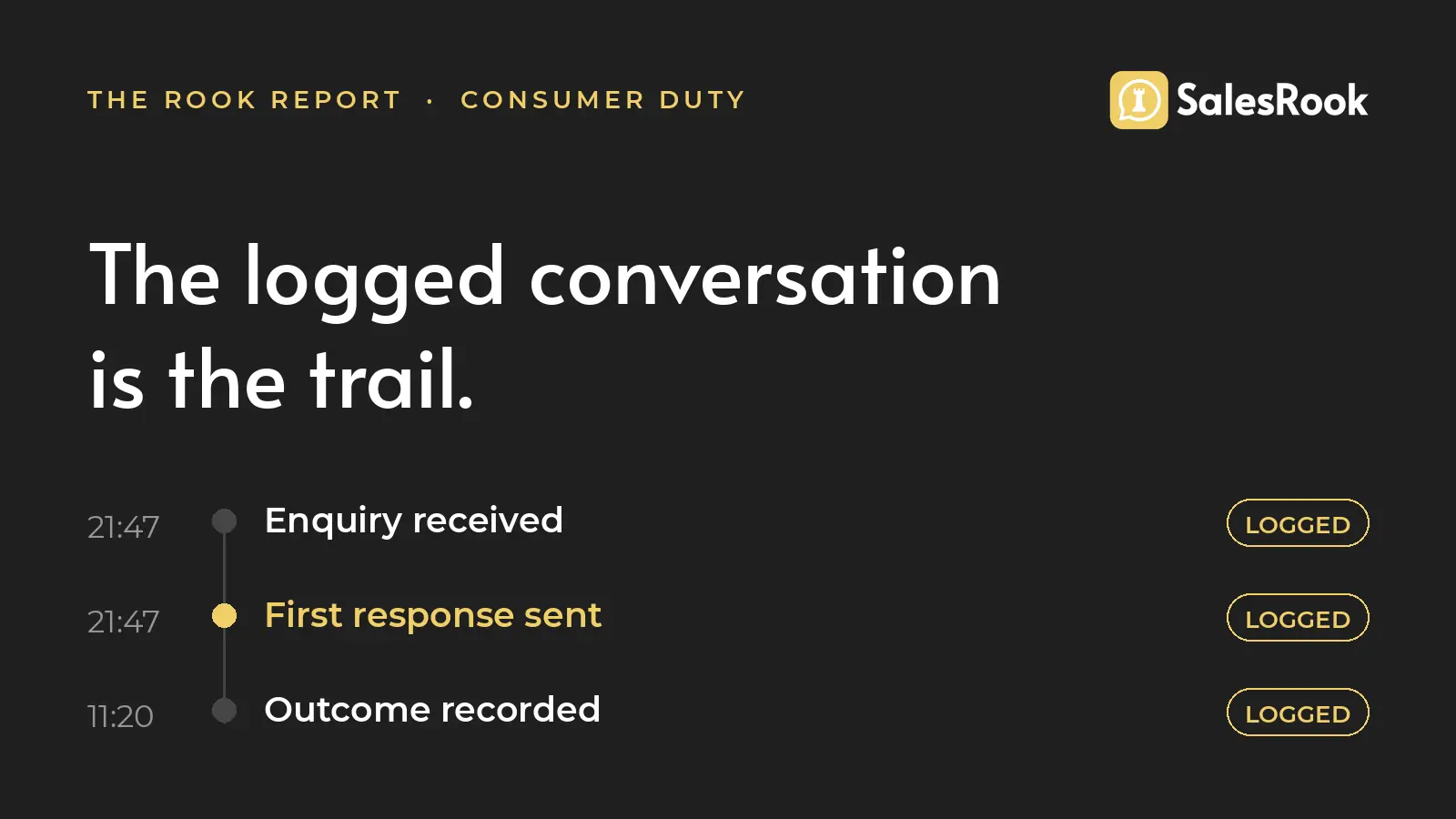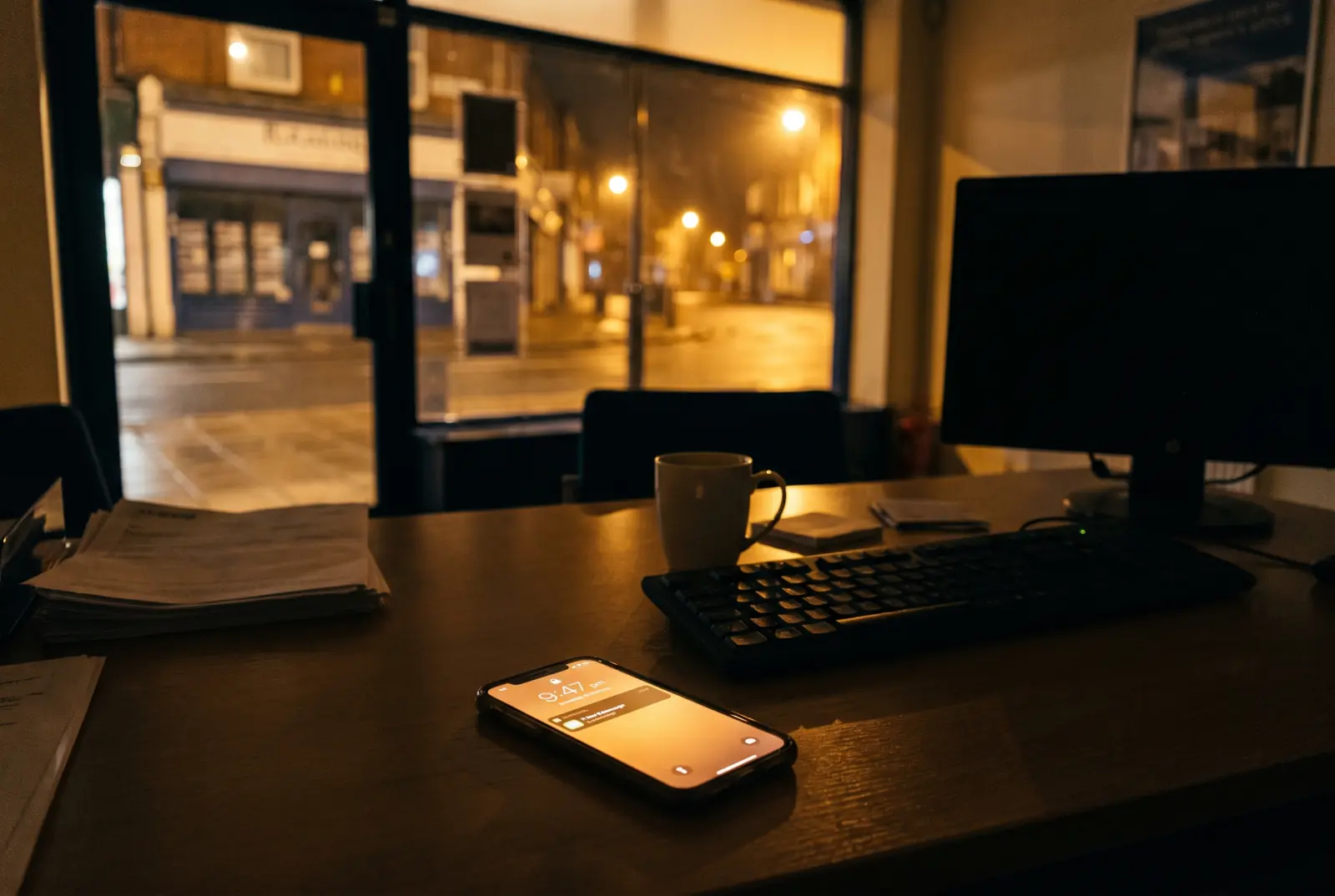
Start with an uncomfortable question. Of all the property enquiries that landed last night, after you locked up and drove home, how many had a genuine reply before you turned the lights back on this morning?
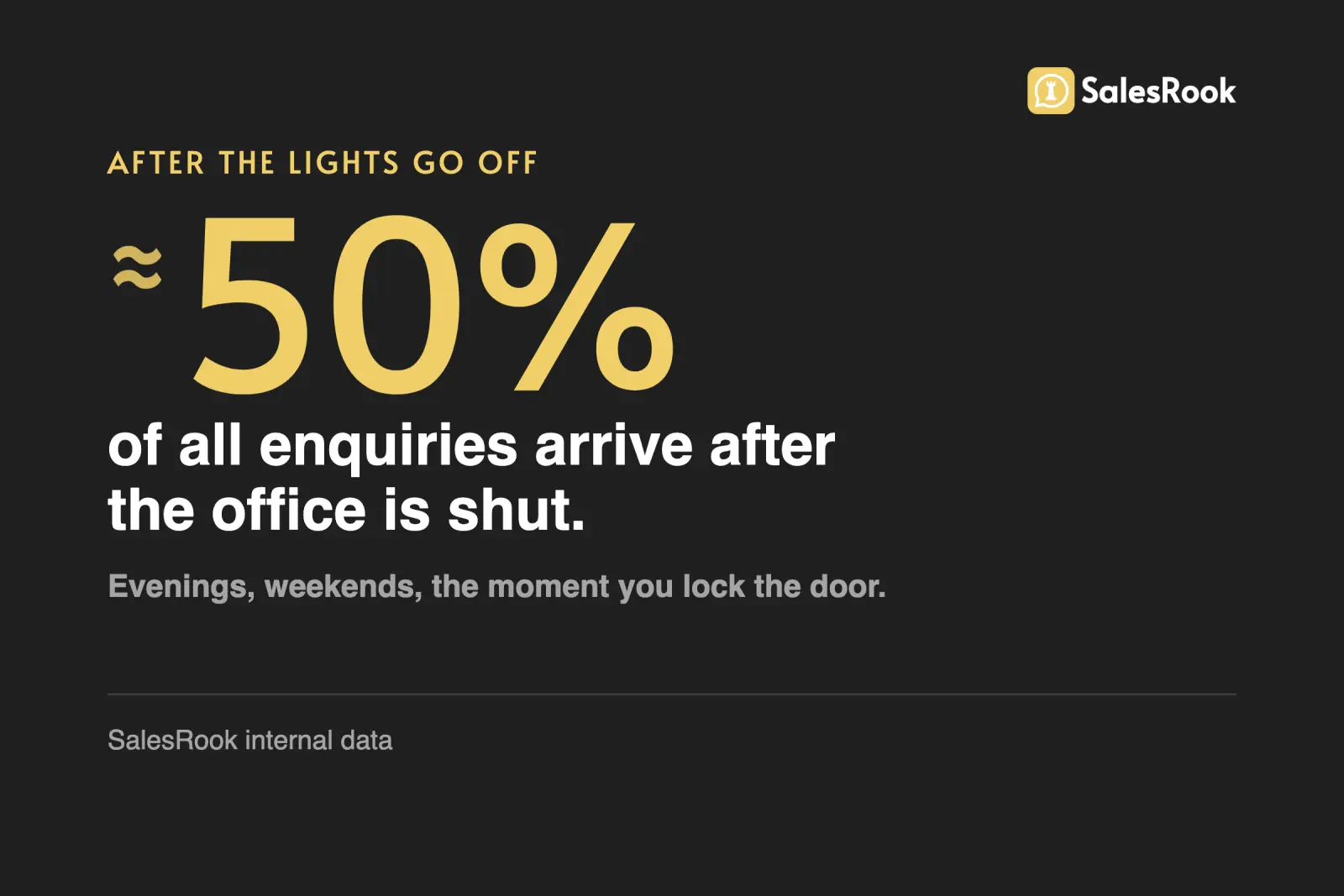
For most agencies, honestly answered, it is very few. And that matters more than almost anything else in your marketing, because roughly half of all enquiries arrive when the office is shut. Evenings, weekends, the moment the last person leaves. If you want the wider argument about where agency growth actually comes from, we set it out in our guide to estate agent lead generation. This piece is about one slice of it, the slice that goes quiet at 6pm and does not come back until Monday.
Half your pipeline turns up when there is nobody at the desk. That is not a small operational quirk. It is the difference between the agency that wins the instruction and the one that finds out, three weeks later, that the buyer had already moved on.
Here is the short version first, in ninety seconds: why the busiest window in property is the one nobody is staffing, what a slow first reply costs an agency, and how an always-on first responder changes the maths.
Presented by Sky from SalesRook. Written by Max Hardy.
Property does not enquire nine to five
Think about when you actually browse for a home. Not at your desk at eleven on a Tuesday. You do it on the sofa with the television on, in bed on a Sunday, in a spare ten minutes on a Saturday between the supermarket and the kids' football. Your buyers are exactly the same, and the portals have measured it for years.
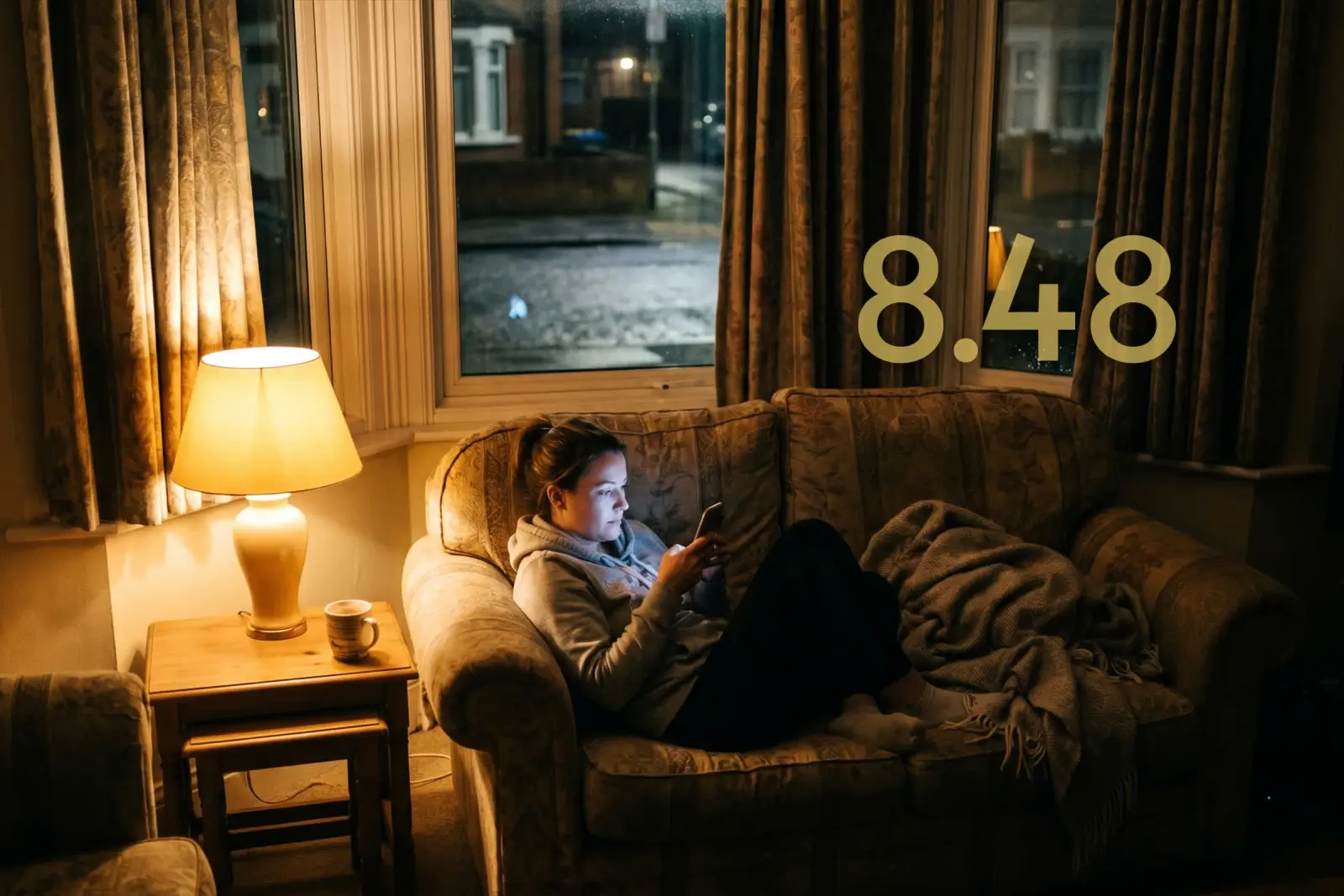
Rightmove's own data is a lovely illustration. It found that the single busiest minute of the week for home hunting is 8.48pm on a Wednesday, with the peak hour falling between 8pm and 9pm every evening. That is prime time for property. It is also, for most high-street agencies, about two hours after the branch has closed for the day.
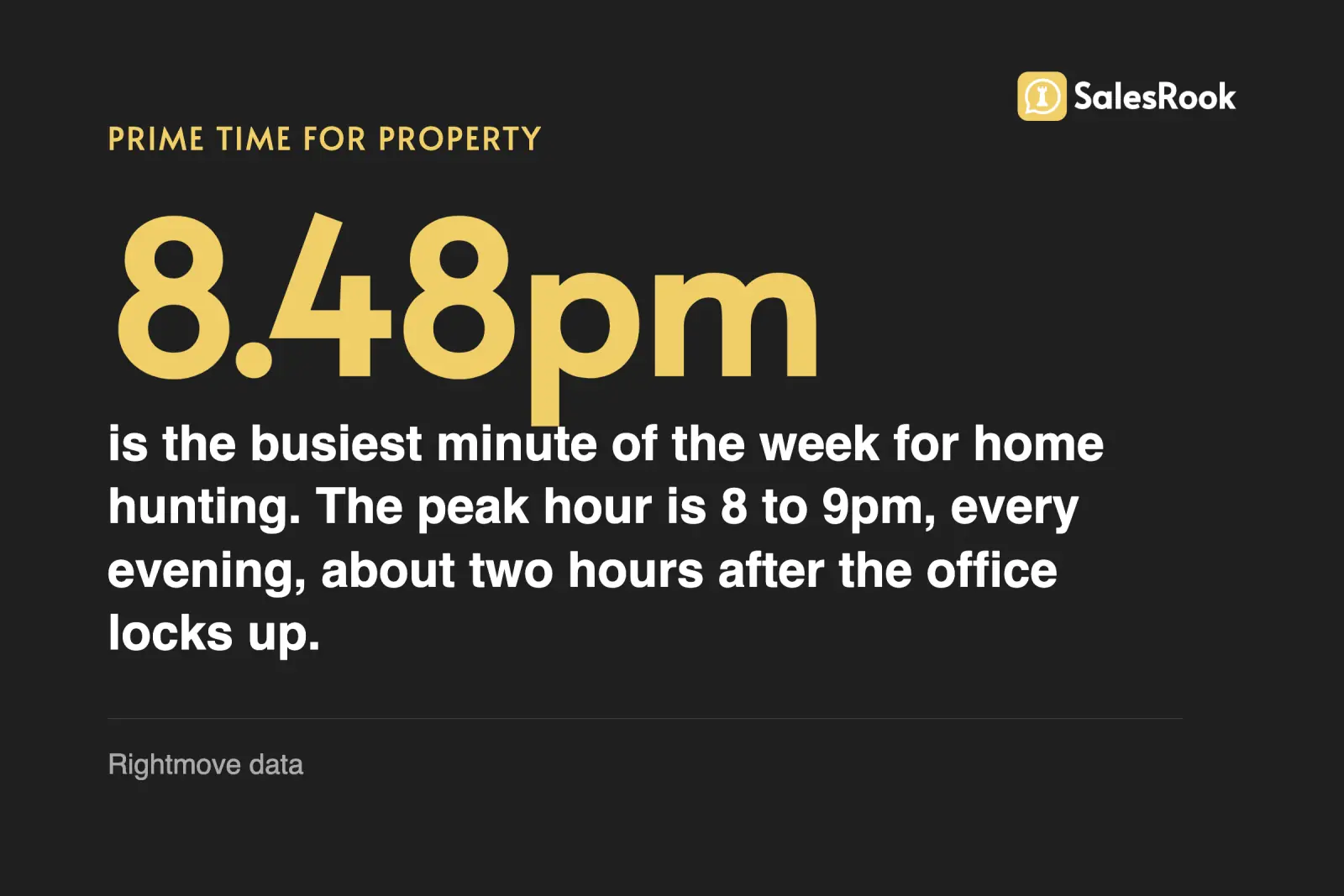
So the demand is real, it is heavy, and it is landing squarely in the hours you cannot cover. The enquiry does not know your opening times. It arrives, full of intent, and then it sits. I will be honest, we underestimated this ourselves for a long time. It was only when we started measuring the after-hours share across the offices we work with that its size became undeniable. It was not a rounding error. It was close to half of everything.
The busiest, warmest window in the week is the one nobody is staffing.
And the buyer on the other end is not patient. They are holding the phone, comparing listings, and often messaging more than one agent while they are at it. The question is simply which of you replies first, and whether that reply sounds like a person or like an empty office.
The Monday reply is not really a reply
We tell ourselves the weekend enquiry is safe, that we will get to it first thing Monday and pick up where it left off. It rarely works that way. By Monday, the buyer has often had two days to book a viewing with whoever answered on Saturday night, and warmth does not keep. A reply that would have felt like brilliant service at 9.05pm feels like a chore at 9.05am on Monday, if it feels like anything at all.
The market has quietly raised the bar here, too. In a July 2026 Street Group survey of 1,830 sellers, 85% said they expect a reply within 24 hours. Twenty-four hours is the outer limit of patience now, not the target. Against that clock, "we will call you Monday" is not a response strategy.
It is a slow way of saying no.
What makes this so easy to miss is that nothing appears to break. There is no error message, no complaint, no gap in the CRM. The enquiry simply never becomes a conversation, and you cannot grieve a viewing you never knew you could have had. The honest agencies say it out loud. Here is the man leading the rollout at a multi-branch London agency, opening the trial in front of his own staff, describing his agency's own process rather than performing for a pitch:
"When somebody enquires out of hours, we're slow with our response times, naturally, because we're not online and working."
The lead on the AI rollout at a multi-branch London agency
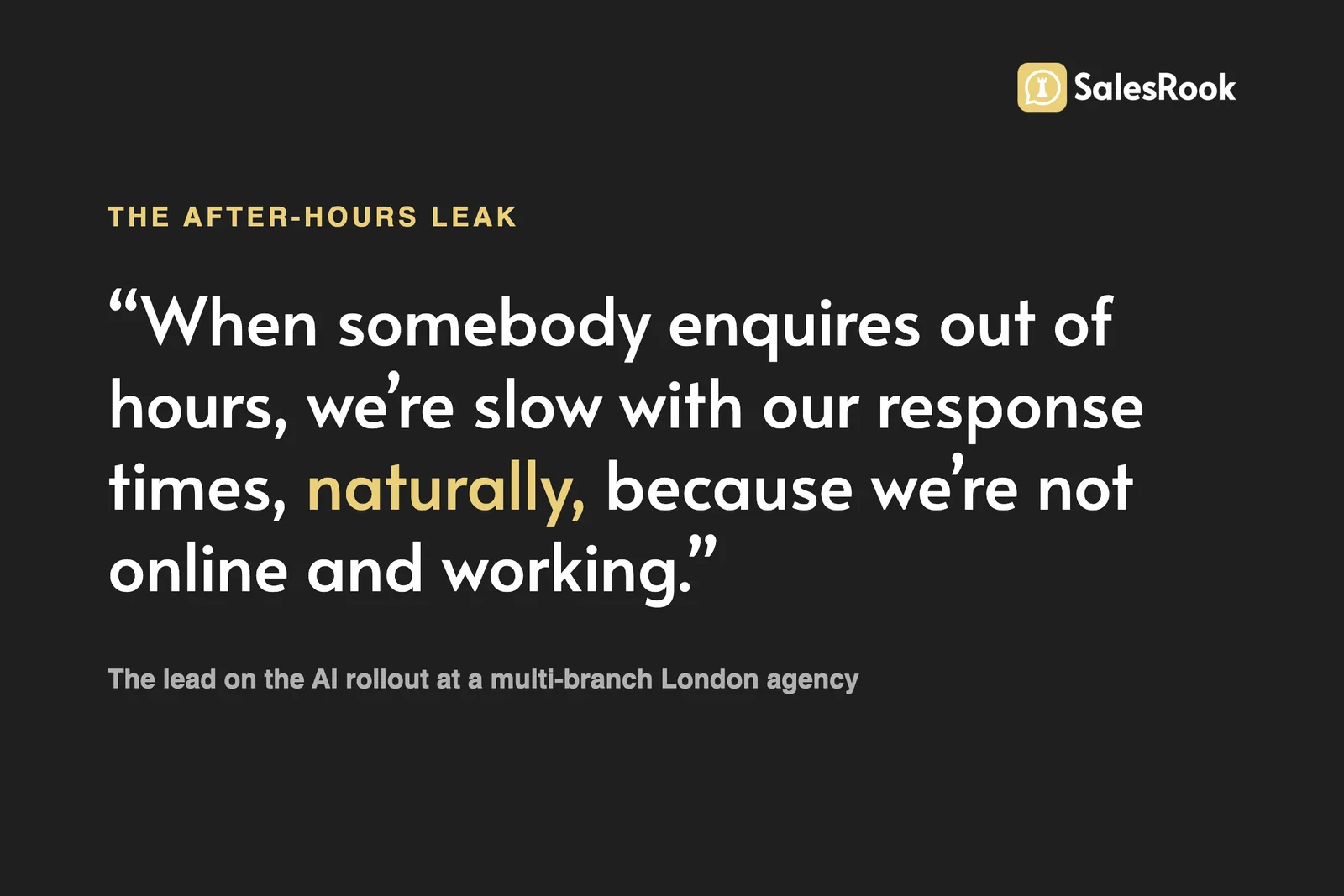
Read that again, because of all the sentences in this piece it is the one I would put on the wall. Naturally. Not carelessly, not lazily. Naturally. Nobody is doing anything wrong. The office is shut, the team has gone home, and the enquiry lands anyway. That is the whole problem in one word: the leak is not a failure of effort, it is a feature of the clock, which is exactly why no amount of trying harder has ever closed it.
You are not short of leads. You are short of replies.
Here is where most people reach for the wrong solution. They see the missed enquiries, assume the answer is more of them, and buy a bigger portal package or another burst of paid ads. But you do not have a supply problem. You already pay handsomely for every enquiry that lands. The problem is that a large slice of what you have bought never gets answered, and buying more of the same only pours more through the same hole.
The same rollout lead, moments after his after-hours admission, named the other half of the problem: "And we don't have an efficient or effective way of prioritizing the leads that come in to try and find the opportunities quickly who are most likely or the applicants who are most likely to actually go in and attend the viewing or put an offer down." Sit that next to the weekend and the picture completes itself. The enquiries pile up unanswered through the dark hours, and the team that returns to them cannot see which ones matter. Buying more enquiries does not fix that. It makes the pile taller.
Look at the gap in plain numbers. Across the offices running our AI, close to 9 in 10 first messages on WhatsApp get a genuine reply. Send the same first message by email, the channel most enquiries are left to, and it is closer to 2 in 10. That is our own platform data rather than an audited third-party figure, and I will always say so, but the shape of it is not subtle. Most enquiries never become a conversation at all, and the after-hours ones are the first to fall through.
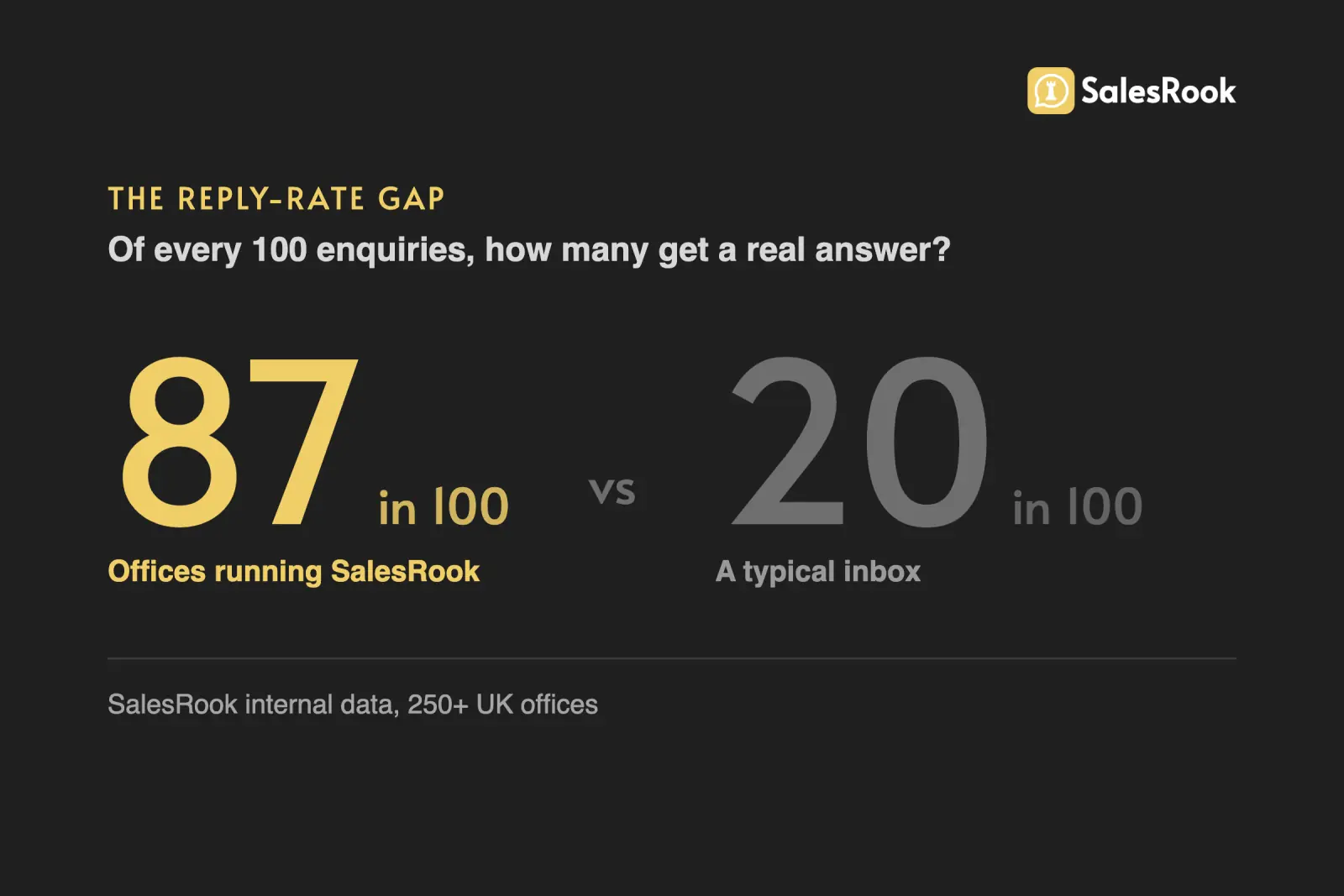
And the enquiries you are missing are not the worthless ones. Buried in that after-hours flow are the messages that matter most: the buyer who needs to sell first, the casual "is it still available" that is really a valuation in disguise. We looked at what one agency's fast, well-read first reply was worth over a year, and the pilot alone surfaced 97 instructions worth over £100,000 in commission, without a bigger marketing budget. The first reply that surfaced them was on duty around the clock, at hours no human team could have covered. We dig into that particular disguise, the enquiry that is quietly a valuation, in a separate piece on the hidden valuations inside ordinary buyer enquiries.
Do not take my word for it. The whole industry is arguing this out in public, and it is worth twenty minutes to hear working agents and proptech people wrestle with the same tension.
The industry is already asking this out loud: adoption without warmth is the real risk, not AI itself.
What an always-on first reply actually does
First, what the fix is not. It is not you. Here is an independent UK estate agent, weighing up an always-on first reply for his own firm, describing how he has covered the gap himself for years:
"If a lead comes in on a Sunday, I'll work it. I've worked Christmas Day where leads have come in and gone, I need to sort this now. And my wife goes mad."
An independent UK estate agent
He is describing the problem, not reviewing a product; when he said it, he had not run one. But every independent will recognise the model, because it is the default: the coverage is you, your Sundays, your Christmas Day. It holds right up to the day it does not.
The fix for the after-hours leak is not a heroic rota or an app that pings a negotiator at midnight. Nobody should be answering enquiries from their bed, and any rota that demands it ends in burnout and sloppy replies. The fix is an always-on first response that greets every enquiry the moment it arrives, in your agency's voice, and does the two things that keep a lead alive: answer the actual question, and gently open the next one. We have set out at length why that first response is a message, not a phone call.
Done well, it does not feel like a bot fending people off until the humans arrive. It feels like a switched-on member of the team who happens to be awake. It confirms the property is available, asks whether they are buying outright or need to sell first, offers a viewing slot, and books it. On WhatsApp for estate agents, the channel buyers actually reply on, that exchange can happen in full while the office is dark, and the enquiry that would have died over the weekend is a confirmed viewing by breakfast.
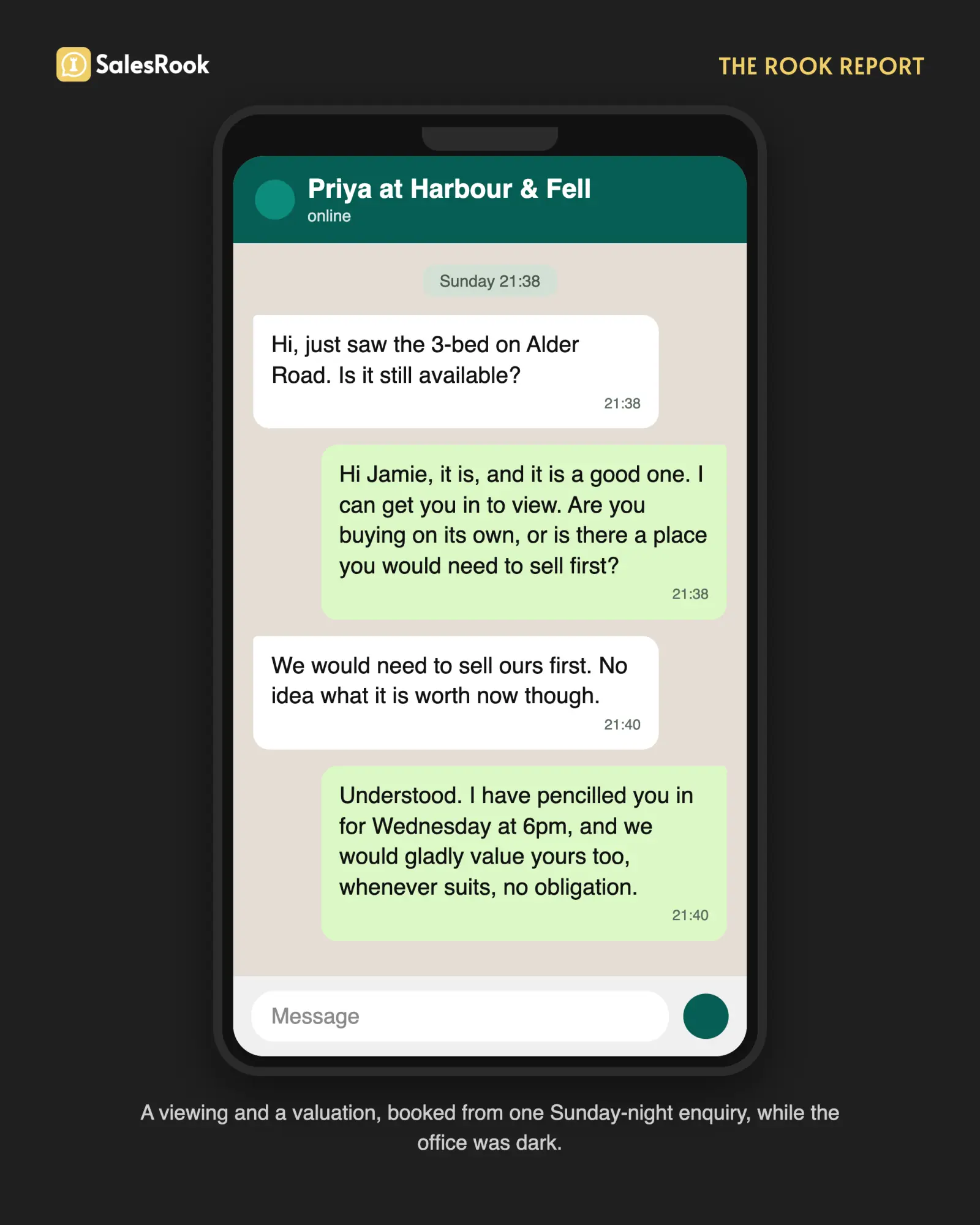
Illustrative mockup, not a real conversation. The idea: no waiting until Monday, so a viewing can be booked and a valuation offered from one Sunday-night message.
Notice what did not happen there. Nobody replaced the negotiator. The AI held the conversation open through the dead hours and handed a briefed, warm lead to a human the next morning, with the viewing already in the diary and a valuation already on the table. That is the point that gets lost in the noise about robots taking over agency: the machine is meant to take the typing and the timing, not the trust.
The industry's own leadership lands in the same place. Propertymark chief executive Nathan Emerson has said plainly that buying or selling a home is still an incredibly personal process, and that AI earns its keep by reducing admin so agents can focus on the human part. The consensus view, as ARLA Propertymark framed it earlier in 2026, is that the agencies that thrive will be those using AI to enhance their service, not replace the human element. Kim Lidbury, ARLA Propertymark's current president, leads a body whose whole message is that the relationship stays the product. Even the employment data agrees: as agencies lean on AI for admin, industry leaders are clear the human element remains essential to the higher-value work of actually selling a home.
And this is arriving whether any single agency chooses it or not. The portals are already there. Rightmove has built its own AI conversational search with Google Cloud, putting a machine at the very front of the property conversation. That machine will meet your buyer at 9pm on a Sunday whether you invite it or not.
The only real choice left is whether it carries your name and your voice, or somebody else's.
Even in the United States, where buyers lean heavily on AI to research a purchase, 81% still say a human agent is essential to the deal. The technology changes who covers the midnight enquiry, not who shakes the hand at completion.
One agency that lived this is DDM Residential in North Lincolnshire. They were never short of enquiries, but a good share arrived when the office was closed, so they put an always-on first reply on the front door and let it hold the after-hours conversations until a negotiator could take over. You can read how DDM turned the after-hours flood into booked viewings in full, but the shape is simple: they stopped losing the enquiries they were already paying to attract.
Run the after-hours audit tonight
You do not need us, or any vendor, to find out whether this is costing you. You can measure it yourself this week, with tools you already have, and I would far rather teach you to do that than ask you to take my word for it.
So here is the one thing to go and do. Pull every enquiry that came in last Friday evening, Saturday and Sunday from your portal and your website. For each one, find the timestamp of your first genuine reply, not an auto-acknowledgement, a real human sentence that moved the conversation forward. Then work out two numbers: how many hours the average after-hours enquiry waited, and how many never got a proper reply at all. If you want the honest version, do it for a whole month.
Run that audit and expect the result to sting, not because your team is lazy, but because the leak was invisible until you looked. It is the honest version of what that rollout lead told his own team: slow out of hours, naturally, because nobody is online and working. Once you can see it, you can price it.
The sum is simple. Take what you already spend each month to make the phone ring, multiply it by the share of enquiries that arrive after hours (for most agencies, roughly half), then by the share of those that never get a proper reply. Put your own numbers in and you have the cost, in pounds, of the pipeline you are letting go cold every weekend. That figure, because it is yours, settles the argument faster than anything I could say.
The enquiries are already coming. Half of them are arriving after you have gone home, warm and ready and quietly slipping away by Monday. Winning them back is not about buying more. It is about making sure that the moment a buyer reaches out, at 9pm on a Saturday or 8.48pm on a Wednesday, someone in your name is there to answer.
Run the audit first. Then, if the number bothers you as much as it should, give us a weekend of your enquiries and we will show you, from your own numbers, what a good first reply, sent while the office is dark, can answer, qualify and book between lights-off and breakfast.

Max Hardy
Co-Founder
Max Hardy is the Co-Founder of SalesRook, a leading provider of AI solutions for the property sector. With a background in technology and property, Max leads SalesRook's mission to transform how estate agents and mortgage brokers engage with leads through AI-powered WhatsApp automation.